There are two kinds of people in this world: people who smell old books when nobody is looking, and people who smell old books when everybody is looking. We're the second kind. If you've ever been caught in a secondhand bookshop with your nose buried in a yellowed paperback, you're in very good company.
The soft, sweet, dusty smell of old books — the one that rises when you open a volume from a secondhand shop or a grandparent's shelf — is one of the most loved scents in the world. It smells of quiet afternoons, rainy weekends, forgotten notes in the margins, pressed flowers falling out of the pages and the slightly guilty feeling of being late returning something to the library. Some people even have a name for loving it: "bibliosmia." And yes, you can wear it.
Why Do Old Books Smell So Good?
The smell of old books is chemistry, slowly happening on the shelf. Paper is made from plant fibers, and older paper in particular contains lignin, a natural substance found in wood. As paper ages, lignin, cellulose and the glues, inks and leathers of the book slowly break down and release a mix of scent molecules into the air.
Some of the molecules in old books smell surprisingly familiar:
- Vanillin: the main scent of vanilla. Lignin is chemically related to it, which is why many old books smell faintly sweet.
- Benzaldehyde: almond-like and slightly marzipan.
- Furfural and other molecules: bready, toasty, caramel-like and a little woody.
- Grassy and earthy notes: from the slow breakdown of cellulose.
Add the leather and glue of the binding, the ink, a few decades of dust and the smell of the room the book lived in — a pipe smoker's study, a damp cellar, a sunny windowsill — and every old book develops its own scent fingerprint. In a way, old books absorb their own life stories.
Sniffing Books Is Officially Science
Researchers have taken the smell of old books seriously. Scientists studying historic paper have analyzed the molecules old books give off as a way to judge how fragile they are, without damaging them — a sort of book medical check-up by nose. Researchers in London have even created a "historic book odor wheel," a guide to describing the smells of old libraries, with words like chocolate, coffee, almond, smoke, earth and wood.
So the next time someone catches you with your nose in an old book, you can tell them you're conducting heritage science. You're welcome.
Old Books vs. New Books
New books smell completely different: sharp, clean and inky, with notes of glue, fresh paper and printing chemicals. Old books smell sweeter, softer and dustier, because time has been quietly at work.
If new books smell like a promise, old books smell like a memory.
The Smell of Old Libraries
A great old library adds its own layers to the scent of old books. Before paper, many medieval books were written on parchment or vellum, made from animal skin, which has its own faint, warm, slightly animalic smell. Monastery libraries smelled of parchment, candle wax, ink made from oak galls, incense drifting in from the chapel and cold stone. Later libraries added polished wooden shelves, leather armchairs, pipe smoke and the warm dust of reading lamps.
That's the smell we chase when we make a book perfume: not just one book, but the whole room.
How Perfumers Build a Library in a Bottle
No perfume contains real old books (the librarians would never forgive us). Instead, perfumers rebuild the scent piece by piece:
- Paper: powdery, dry, slightly sweet notes, often from iris-like materials, soft woods and a touch of vanilla.
- Leather bindings: soft, dusty leather accords.
- Wooden shelves: cedarwood, which smells like pencil shavings and old furniture.
- Dust and age: dry, slightly musty, earthy notes like vetiver.
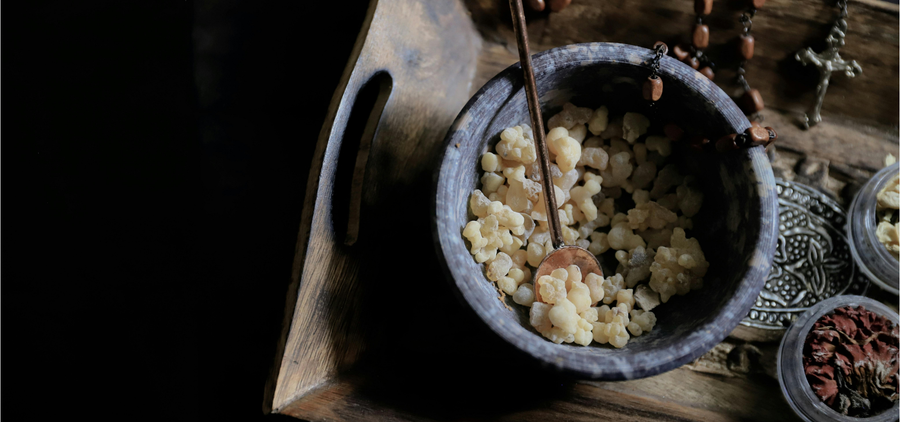
- Balsam and vanilla: the sweet side of aged paper, from Peru balsam, benzoin and vanilla.
- Ink and herbs: a green, herbal note like basil, or a dark, inky touch.
- Almond: a hint of benzaldehyde-like sweetness, just like the paper of real old books.
Our Library in a Bottle
Old Library
A monastery library with a hidden door. Shelves of ancient, leather-bound volumes stretch into shadowy corners. The air is thick with musty parchment and whispered secrets. Dim candlelight reveals cryptic symbols on the walls. One night, a scholar finds a hidden chamber behind a sliding bookshelf and a sinister tome bound in blackened leather, its pages full of arcane symbols and dark prophecies. He reads it to the last page — and vanishes, becoming part of the library forever.
The perfume opens with bergamot and sweet basil, moves into rosewood and powdered papers, and settles on aged leather, cedarwood, vetiver, Peru balsam and dark vanilla. It's the scent of old books made wearable — sweet, woody and gently spicy: leather-bound volumes, fragile papers, ancient wooden shelves and a medieval monastery aura.
First released in 2019, Old Library has been refined twice, in 2022 and 2024, to make it richer and deeper with softer accords. Like any good book, it got better on a second reading.
More Bookish Perfumes
- Gothika: an abandoned cathedral where a hidden tome bound in cracked leather reveals a tragic affair and a dark pact, surrounded by candle wax, incense and century dust.
- Amadeus: powdery aged sheet music, antique instruments and powdered wigs, with a soft amber drydown.
- Purple Veil: powdery, melancholic florals, like a pressed flower found between the pages of a forgotten diary.
Who Is a Book Perfume For?
- People who own more books than shelves.
- People who have been told "you can't buy another book until you finish the ones you have" and ignored it completely.
- Writers, students, librarians, archivists, teachers and professional daydreamers.
- Anyone who has ever stayed in a bookshop until the staff started turning off the lights.
- Anyone who buys old books for the smell as much as for the story.
- Anyone who has ever wished they could live in a library.
How to Wear a Book Perfume
- Wear it while reading. It's the ultimate reading companion, especially on a rainy day.
- Wear it to study or write. Many people find book scents calming and focusing.
- Spray a bookmark. Lightly mist a paper bookmark and leave it in your current book. Every time you open it, the library opens too. (But keep it away from valuable or old books.)
For more literary scents, read perfumes inspired by gothic literature.
Frequently Asked Questions
Why do old books smell like vanilla?
Old paper contains lignin, which is chemically related to vanillin. As it breaks down, it can release sweet, vanilla-like and almond-like molecules.
Is there a perfume that smells like old books?
Yes. Our Old Library captures the smell of old books with powdered papers, aged leather, cedarwood shelves and dark vanilla.
What does Old Library smell like?
Leather-bound books, powdery old papers, wooden shelves and a sweet, balsamic vanilla warmth, with fresh basil and bergamot at the start.
Is a book perfume heavy?
Not necessarily. Old Library is warm and woody but soft and cozy, easy to wear every day in the cooler months.
What's a good perfume for book lovers?
Old Library is our classic book perfume. Gothika is a great choice if you love gothic churches and candlelit reading.
Final Thoughts
The smell of old books is the smell of time, patience and stories waiting to be found again. Wearing it is like carrying a quiet library with you — the kind with tall shelves, dusty light and a hidden door you're not supposed to open. Open it anyway...