
Let's get the most common question out of the way first: no, there is no real blood in our perfumes. Nobody in our Uppsala studio has been sharpening their teeth, and the only thing we drain on a regular basis is the coffee pot.
And yet "blood" is one of the notes people ask us about most. It's a strange thing to want to smell. Blood is the smell of scraped knees on the playground, a nosebleed in the middle of a math test, the dentist's chair. It's also the smell of every vampire story you've ever loved, every gothic tragedy, every queen with a stained crown and every heroine who pricks her finger on a spindle. Somewhere between childhood and the crypt, blood becomes something beautiful and terrible at the same time — and that's exactly the kind of note gothic perfumery was made for.
So how do you bottle the smell of blood without a single drop of it? Pull up a chair. Not that one, it creaks.
Why We're Drawn to the Smell of Blood
Blood is one of the few smells almost every human recognizes instantly, even if they've never thought about it. That's not an accident. For most of human history, the smell of blood meant something important: an injury, a danger, a hunt, a birth. Our noses learned to notice it fast.
It's also loaded with meaning. In myths and religions all over the world, blood stands for life, sacrifice, family, guilt and power. We swear blood oaths, talk about bad blood and blue blood, and say that some things are "in the blood." When a perfume hints at blood, it's tapping into thousands of years of stories, which is why even a tiny metallic note can feel so dramatic.
Why Does Blood Smell Like Metal?
Ask anyone what blood smells like and they'll say the same thing: metal. More precisely, copper — an old penny, a key you've held too long in your hand. The funny thing is that metal itself barely smells of anything. A clean iron nail sitting on a table is almost odorless.
What we smell is chemistry happening on our skin. When iron touches the natural oils on skin, it sets off a reaction that produces a molecule called 1-octen-3-one, which has a sharp, mushroomy, metallic smell. That's the "coin" smell on your fingers after you've counted change or held the handrail on an old staircase.
Blood has its own signature molecule too. Scientists have identified one compound, known as trans-4,5-epoxy-(E)-2-decenal, as a key part of the smell of blood. It's so powerful that predators like wolves are strongly drawn to it, and humans can detect it at incredibly low levels. Our noses, it turns out, are built to notice blood. Evolution didn't want us to miss a wound — or a dinner opportunity.
Blood in Gothic Stories
Gothic literature is soaked in it. Vampires, of course, from Polidori's elegant villain to Stoker's Count. But also cursed families, bloodlines and inheritances, murdered brides and portraits that bleed. One of the most famous dark legends of all tells of Countess Elizabeth Báthory, who was said to bathe in the blood of young women to keep her youth. Historians doubt the bathing part, but the legend has haunted gothic imagination for centuries.
In all these stories, blood is rarely just gore. It's a symbol: of desire, of guilt, of the past that won't stay buried. That's the blood we want to capture in perfume. Not a crime scene, but the shadow of a story.
How Perfumers Build a Blood Accord
Perfumers don't copy blood molecule by molecule. A literal blood smell would be closer to a hospital than a haunted abbey, and nobody wants to wear "emergency room no. 5." Instead, we build an accord — a small blend of materials that creates the impression of blood, the way a painter suggests a face with a few brushstrokes.
And because blood is a fictional accord, there's no single right recipe. No raw material smells exactly like blood, so every perfumer invents their own version. One might make it bright and coppery, another dark and winey, another salty and skin-like, using completely different materials to get there. Two blood notes from two perfumers can smell nothing alike — and both can be right. That's part of the fun.
Still, most blood accords stand on three legs: metal, wine and salt. Metal gives the coppery edge everyone recognizes. Wine gives the deep red, slightly fermented richness. Salt gives the feeling of something living — skin, sweat, tears. Each of the three can come from many different materials, some easy to find and some rare and precious.
Metal
- Naturals: saffron, with its leathery, metallic glow; violet leaf absolute, green and cold as a blade; rose and geranium, which both carry a subtle metallic edge; iris, cool and slightly silvery.
- Molecules: aldehydes such as C-10, C-11 and C-12 MNA for a bright, coin-like shimmer; rose oxide, which is sharp and metallic in small doses; Helional and Calone for a cold, watery, steely air; methyl octine carbonate for the green-metal side of violet leaf; and a trace of mushroomy, metallic molecules like 1-octen-3-ol.
Wine
- Naturals: cognac essential oil, distilled from wine lees, for a dark, boozy depth; davana, fruity and liqueur-like; black currant bud absolute, tart and deep purple; labdanum, which can read almost like old port; and red fruit accords like pomegranate, plum and black cherry.
- Molecules: damascones and damascenone, which smell of cooked plums and red wine; ethyl heptanoate and other fruity esters with a cognac-like warmth; and raspberry ketone for a juicy, jammy red.
Salt
- Naturals: buddha wood, smoky, dry and subtly salty; butter CO2 extract, with its rich, salty-creamy warmth; ambrette seed, musky and skin-like; seaweed absolute, briny and mineral; ambergris tincture, the most precious salt of all; and the tiniest touch of lovage or celery seed for a savory, almost bodily note.
- Molecules: Ambrox, Cetalox and Ambrocenide for a mineral, salty-skin radiance; and macrocyclic musks like Exaltolide and Habanolide for the warmth of skin.
Around those three legs, perfumers add the story: a dark rose for romance (read more in black rose: dark rose perfumes), leather for something worn and dangerous, earth and incense for a crypt.
The art is in the balance. Too much metal and it smells like a toolbox. Too much wine and you've opened a bottle of Merlot. Too much salt and you're at the seaside. The sweet spot is a scent that makes you lean in and pull back at the same time — like reading the last chapter of a horror novel with one eye closed.
One Accord, Many Kinds of Blood
Here's what we find fascinating: by changing the proportions of metal, wine and salt, the same three ideas can tell completely different stories.
- Fresh blood: more metal, a little salt, a touch of wine. Bright, coppery and alarming — a cut, a bite, a moment of shock.
- The vampire's kiss: more wine, less metal, soft salty skin. Velvety, romantic and dangerous, like dark lips after a sip from the wrong glass.
- Dried blood: the metal fades and the wine darkens, while salt, leather, dust and earth take over. A stain on old stone that nobody has scrubbed away in centuries.
- Blood after battle: metal and salt with smoke, iron and scorched earth. The silence after it's over.
Our three blood perfumes explore different points on that map.
Dark Tales Perfumes With a Blood Note
NSFRTÅ
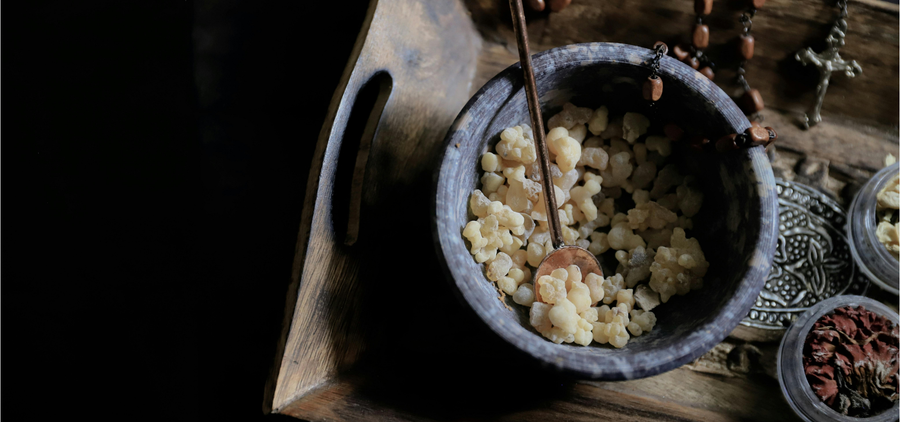
Dried blood in a forgotten abbey. Our homage to Nosferatu keeps its blood in the heart: dried blood, dark rose and patchouli, wrapped in smoked birch, black pepper and absinthe at the top, and resting on incense, leather, vetiver and ambergris. It isn't a splatter. It's a stain — the cold, ethereal-metallic air of a crypt where something happened long ago and the stones still remember it.
It opens sharp and smoky, almost like stepping out of a carriage into freezing night air. Then the rose and blood appear, quiet and velvety, and the base settles into incense and soft leather that lingers for hours. If vampires had a signature scent, we like to think it would smell a little like this. And yes, it's vegan, which feels like the right kind of irony.
Bloody Mary
A crown stained red. This perfume imagines Queen Mary I, alone with her blood-soaked crown, withered roses in her dark hair, haunted by the faces of those lost in her reign. Here the blood is fresh and fruity: a metallic, airy, juicy pomegranate opening with black currant and spicy carnation, falling into rose, tuberose, jasmine, incense and myrrh, and finally a warm, gentle leather with patchouli and dark wood.
It's the most wearable of our blood scents. Regal, red, a little guilty. The kind of perfume you wear to a dinner party where you plan to win every argument.
Ondskan
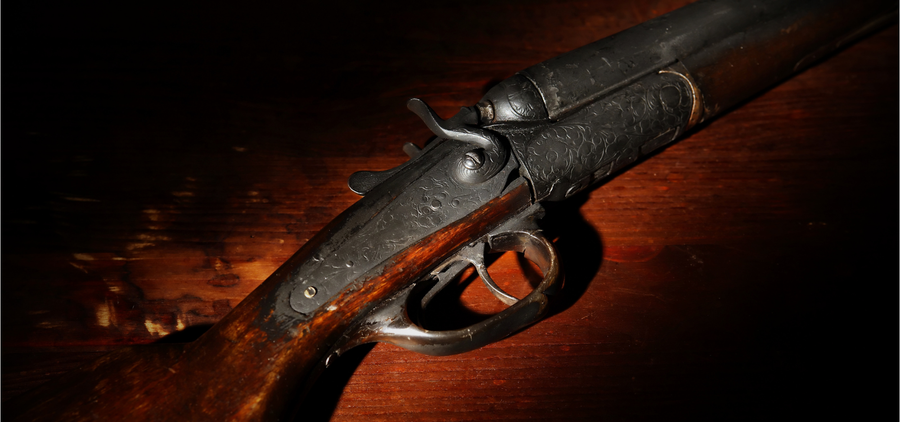
Blood after the fire. Ondskan means "evil" in Swedish, and it doesn't pretend to be pretty. It opens with green cognac, crushed tomato leaf and bright resin, turns cold with stone, vetiver, smoked woods and dry spice, and ends with a blood accord beside gunpowder, burned resins, leather, moss, hyraceum, dark incense and animalic woods.
This is blood as the trace of something irreversible, the silence after it's over. It's disturbing, challenging and bold, and it was made to confront darkness, not to glamorize it. We strongly recommend trying it as a sample before a full bottle — and possibly not before a first date. It isn't vegan, as it contains hyraceum, choya nakh and wool absolutes.
How to Wear a Blood Note
- Start with a sample. Blood notes are love-or-hate, and you deserve to find out which one you are in private.
- Give it time. The metallic opening often softens into rose, resin and leather after twenty minutes or so. Don't judge it in the first sniff.
- Pick your season. Blood notes shine on cold evenings, in candlelight and in black velvet. In a hot summer office, they can feel a little too much like a crime documentary.
- Apply lightly. One or two sprays is plenty. Blood notes are about suggestion.
- Layer with care. A blood note over a soft vanilla can be gorgeous. Over another blood note, you're auditioning for a horror film.
Perfect Pairings
Want to build a mood? Here are a few combinations we love:
- Bloody Mary + Floating Candles: a royal portrait lit by candles in a haunted gallery.
- NSFRTÅ + Gothika: a vampire's visit to an abandoned cathedral.
- Ondskan + nothing at all: it really doesn't need help.
New to dark perfume? Start with what is gothic perfume? or read about the undead in vampire perfumes.
Frequently Asked Questions
Is there real blood in blood note perfumes?
No. Blood notes are built from plant materials and aroma molecules that create the impression of blood. No blood is used, and NSFRTÅ and Bloody Mary are both vegan.
What is a blood accord made of?
It depends on the perfumer, since it's a fictional accord with no single recipe. Most balance three ideas: metal for the coppery edge, wine for depth and color, and salt for the sense of living skin. Each can come from many different naturals and molecules.
Does a blood note smell like a hospital?
Not when it's done well. A good blood accord is softened with roses, resins, fruit and leather, so it feels atmospheric rather than clinical.
Which blood perfume should I try first?
If you're curious but cautious, start with Bloody Mary. If you love dark, cold scents, try NSFRTÅ. If you want the most intense experience, try Ondskan — as a sample.
Are blood note perfumes unisex?
Yes. All Dark Tales perfumes are unisex.
Final Thoughts
The blood note is one of the strangest gifts perfumery can give: the chance to wear something that, in real life, you'd never want on your skin. That's the magic of a dark tale. It lets us walk into the crypt, touch the stained stones and walk out again — smelling, if we're lucky, absolutely wonderful.
Want to try all three? Find them, along with the rest of our collection, in the Complete Discovery Set.