Every perfumer's lab starts somewhere, and it's rarely glamorous. A kitchen table. A corner of a bedroom. A desk in a spare room that slowly fills with little brown bottles until the family starts asking questions. If you've ever dreamed of making perfume, the good news is that you don't need a professional laboratory, a white coat or a chemistry degree to begin. A small desk, a few pieces of glassware and a good scale are enough.
What matters most is being precise, organized and safe. Here's how to set up a home perfume lab that will grow with you — from your first wobbly accord to a shelf full of formulas you're proud of, and eventually a dedicated lab space.
Choosing Your Space
- Ventilation: work near an open window or with good airflow. Smelling concentrated materials all day is tiring and, in a closed room, unhealthy.
- A neutral room: avoid the kitchen, where frying onions will ruin your jasmine, and rooms with scented candles or air fresheners.
- A stable, easy-to-clean surface: glass, tile or a laminate desk. Perfume materials can mark wood and dissolve some plastics. (Ask anyone who's spilled a citrus oil on a varnished table.)
- No open flames (!): perfumer's alcohol and many materials are highly flammable.
- Out of reach: keep everything away from children and pets. Little brown bottles look very interesting to small hands and curious paws.
Essential Equipment
A Precision Scale
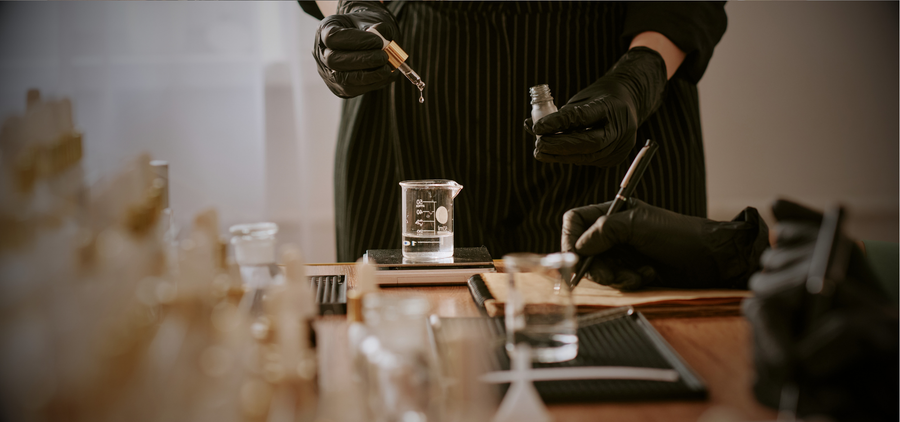
This is your most important tool. Professional perfumers weigh rather than count drops, because drops vary in size from material to material — a drop of thick labdanum and a drop of thin bergamot are nowhere near the same amount. Look for a scale that measures to 0.001 g (one milligram) for mini trials, or at 0.01 g when you're starting out. It's the difference between a formula you can repeat and a happy accident you'll never make again.
Glassware
- Small glass beakers (10 ml to 50 ml) for blending
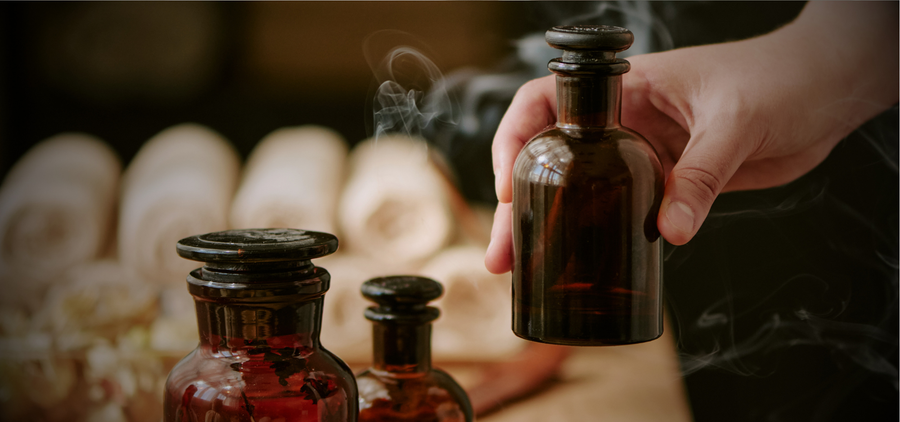
- Glass bottles with screw caps for dilutions, ideally amber to protect from light
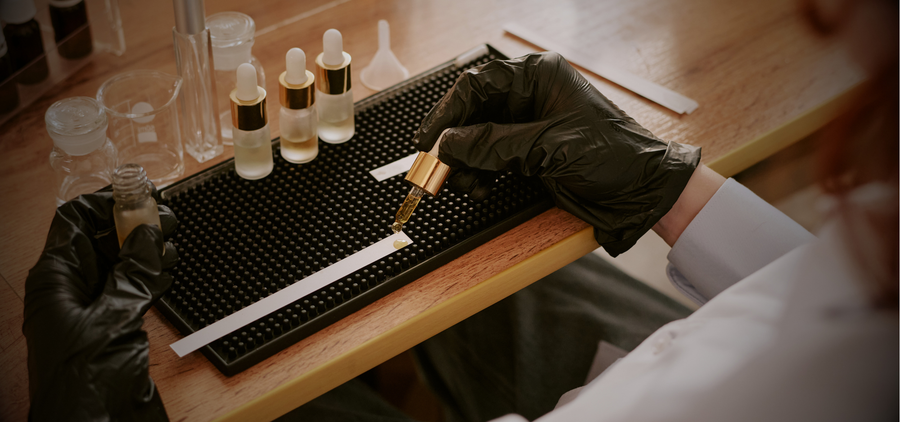
- Glass or disposable plastic pipettes, with a separate pipette for each material
- Glass stirring rods
- Spray bottles or roll-ons for finished perfumes
Smelling Strips
Paper blotters, or mouillettes, let you smell a material and follow how it changes over hours or days. Write the material name and the time on each strip. You'll soon have a desk covered in little paper flags, which is the universal sign of a perfumer at work.
Solvents
- Perfumer's alcohol: high-proof denatured ethanol made for perfumery, the standard base for perfume.
- DPG or IPM: odorless solvents used to dilute materials that don't dissolve well in alcohol, or for oil-based perfumes.
- Fractionated coconut oil or jojoba: carriers for oil perfumes.
Making Dilutions
Most perfume materials are far too strong to smell or use neat. Smelling some of them straight from the bottle is like listening to music with your ear pressed against the speaker. Some perfumers keep each material as a dilution, usually 10%, 1% and sometimes 0.1%. Others (like us) prefer working with neat materials only, which is a matter of choice.
A 10% dilution is 1 g of material in 9 g of alcohol. Very powerful materials, like indole, damascones or aldehydes, are often kept at 1% or lower. Working with dilutions makes formulas easier to weigh accurately, helps you smell a material's real character and saves expensive ingredients. See which materials need the most care in difficult perfume ingredients.
Labeling and Records
- Label every bottle with the material name, dilution, solvent and date.
- Keep a formula notebook or spreadsheet with every formula, every change and your impressions over time.
- Record your supplier, batch number and IFRA limit for each material.
- Keep the safety data sheet (SDS) for each material.
A formula you didn't write down is a formula you'll never make again. Every perfumer has at least one tragic story about the best accord they ever made, mixed on a Tuesday night and recorded nowhere.
Storage
Heat, light and air are the three enemies of perfume materials. Citrus oils oxidize quickly, and some naturals change color or smell over time. Store materials in tightly closed amber glass, in a cool, dark cupboard. Citrus oils and fragile top notes last longer in the fridge, in a sealed box so they don't scent your butter. (Bergamot-flavored cheese is not a delicacy.) Best if you buy a little cosmetic fridge for these oils.
Safety Basics
- Wear nitrile gloves when handling neat materials, as some are skin irritants.
- Wear safety glasses when pouring or working with strong materials.
- Never taste materials or pipette by mouth.
- Wipe up spills right away and clean glassware with alcohol.
- Take breaks. Your nose gets tired after about twenty minutes of intense smelling, and fresh air resets it.
- Check every material's IFRA limit before using it in a perfume you'll wear.
Training Your Nose
Your lab is only half the toolkit. The other half sits in the middle of your face. Smell one material a day and write down what you notice: what it reminds you of, how it changes, how long it lasts. After a few months, you'll be amazed at how much you can recognize. Your nose is a muscle; the more you use it, the stronger it gets.
Growing Your Lab
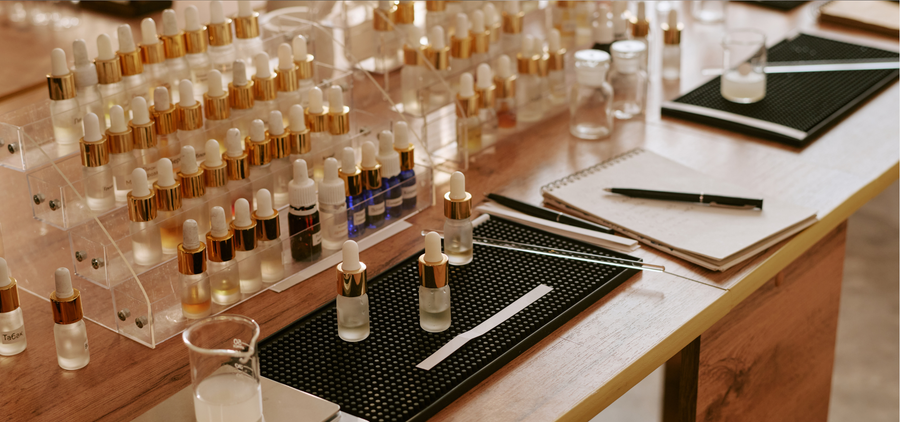
Start small. A few dozen well-chosen materials will teach you more than hundreds you don't know. Our perfumer's starter kit lists where to begin, and easy materials for beginners covers the most forgiving ones. Before you buy, read how to tell if a perfume ingredient is good quality, where we also share the suppliers we trust. Over time, your collection will grow into a perfumer's organ — the traditional tiered shelf of materials perfumers sit before like a musician at a keyboard. Ours in the Uppsala studio holds more than 400 raw materials.
Dreaming of doing this professionally? Read how to become a perfumer.
Frequently Asked Questions
What equipment do I need to make perfume at home?
A precision scale, glass beakers and bottles, pipettes, smelling strips, perfumer's alcohol and a notebook are enough to start.
What kind of alcohol is used in perfume?
Perfumer's alcohol, a high-proof denatured ethanol made for perfumery.
Why do perfumers weigh instead of using drops?
Because drop sizes vary between materials. Weighing makes formulas accurate and repeatable.
How should I store perfume materials?
In tightly closed amber glass, in a cool, dark place. Citrus oils keep best in the fridge.
Is making perfume at home safe?
Yes, with basic precautions: ventilation, gloves, no open flames, careful labeling and respecting IFRA limits.
Final Thoughts
A good perfume lab is less about expensive equipment and more about habits: weighing accurately, labeling everything, keeping records and working safely. Get those right, and the creative part becomes much easier — and much more fun.