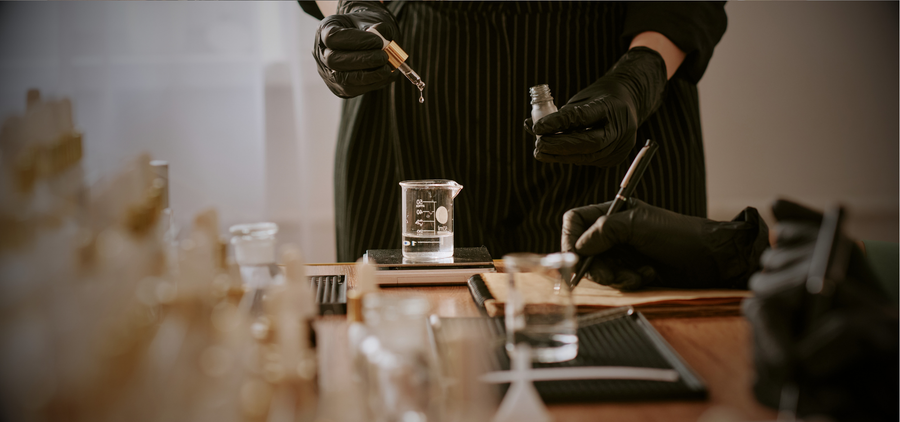
Every perfumer has a story about the drop. You know the one. The formula was perfect. It was balanced, beautiful, almost finished. And then, in a moment of confidence, they added one more drop of something powerful — and the whole thing collapsed. Hours of work, gone. The room smells like mothballs. Somewhere, a cat leaves in protest...
But overdosing is only half the story. Some materials are difficult not because they're too strong, but because they're physically hard to work with: so thick they won't pour, so sticky they cling to everything, or so solid they have to be melted before you can even weigh them. Learning to handle both kinds is what separates a beginner from an experienced perfumer — and many of these materials are exactly the ones that give dark perfumes their character. Here are the materials that humble every perfumer, and how to tame them.
The Overpowering Ones
Indole
Indole is the animalic heart of jasmine, tuberose and orange blossom. Neat, it smells of mothballs, decay and things you'd rather not name. At a tiny level, it makes white flowers smell alive and sensual. The line between the two is very thin, so it's usually kept at 1% or even 0.1%. It's a perfect example of the old perfumer's saying: the dose makes the perfume.
Skatole
Even more fecal than indole, skatole is used to rebuild civet and animalic notes. A trace adds warmth and a sense of skin. A drop too much and your perfume smells like a farmyard in August.
Aldehydes
Aldehydes C-10, C-11 and C-12 give the bright, soapy, metallic fizz of classic perfumes — the champagne sparkle of the 1920s. They're extremely strong, and too much smells harsh, waxy and like an extinguished candle. They also need time in the blend to settle down and stop shouting.
Damascones
Damascones give rose its fruity, plum-like, jammy depth. They're among the most powerful molecules in perfumery, and they spread through everything they touch, like glitter at a children's party. Most perfumers use them at a fraction of a percent.
Calone
The molecule behind marine perfumes. Even a little can make a whole perfume smell of melon and sea spray. Too much and you've made a 1990s sports cologne by accident.
The Dark, Smoky Ones
Birch Tar
Smoky, leathery and tarry, birch tar is one of the great dark materials. It's also extremely tenacious and can take over a perfume completely — and your hands, and your desk, and your hair. It needs a rectified quality, careful dosing and respect, and it's restricted by IFRA. Read its story in smoke and leather.
Cade Oil
From juniper wood, cade smells of campfire smoke and smoked ham. Like birch tar, it's strong, sticky and restricted.
Costus
Strongly animalic, with a smell of hair and unwashed skin. The natural material is prohibited by IFRA, so perfumers use reconstructions, which are still tricky to balance.
The Green and Bitter Ones
Galbanum
Galbanum is an intensely green, bitter resin, like crushed stems, snapped green peppers and a freshly mown lawn all at once. A little brings a perfume to life. Too much makes it sharp, harsh and slightly aggressive.
Violet Leaf
Green, cucumber-like and watery. It's powerful, and it can quickly turn a perfume cold and metallic, like a salad that's been left in the fridge too long. Neat — it's almost a swamp.
It's Not Just About Strength: When Consistency Is the Problem
Here's something most perfume lovers never think about. Not every perfume material is a nice, runny liquid you can drip from a pipette. Many of the most beautiful naturals are thick, gluey, waxy or completely solid at room temperature. They smell wonderful — but before they can go into a perfume, they have to be persuaded.
Thick and Sticky Materials
Some materials have the consistency of honey left in the fridge, or tar on a cold day:
- Labdanum: dark, ambery and one of the stickiest substances on earth. It clings to pipettes, beakers, gloves and fingers. Perfumers joke that you never finish working with labdanum; you just stop.
- Oakmoss absolute: a thick, dark, almost tar-like paste.
- Balsam (Tolu, Fir, and other) absolutes: dense, sticky, resinous materials that smell like a forest and behave like glue.
- Peru balsam, styrax and benzoin: syrupy resins that pour slowly, if at all.
- Some CO2 extracts and absolutes: often thick pastes rather than oils.
Solid Materials
Others are fully solid at room temperature:
- Orris (iris) butter: a pale, waxy solid that must be gently warmed before it can be poured.
- Beeswax absolute: as solid as a candle.
- Some absolutes and concretes, which can be semi-solid or crumbly.
- Crystals and powders: coumarin, vanillin, ethyl vanillin and some musks come as powders or crystals. If they aren't fully dissolved, they come back out of solution later and leave little snowflakes at the bottom of the bottle.
Why This Makes a Perfume Hard to Make
- Heating: solid and very thick materials have to be gently warmed, usually in a warm water bath, before they can be weighed or blended. Too much heat, and the delicate top notes are lost.
- Weighing: sticky materials don't drip neatly. Getting an exact amount of something with the texture of tar takes patience, and a lot of it stays behind on the glassware.
- Dissolving: they need time, warmth and stirring to fully dissolve in alcohol, sometimes over days.
- Filtering: natural resins and absolutes leave waxes and sediment that have to be filtered out, often more than once. Thick perfumes filter slowly, drop by drop.
- Losses: every transfer and every filter leaves precious material behind, which matters when a material costs hundreds of dollars for a few grams.
- Stability: even after filtering, some natural sediment can form over time. That's a sign of real materials, not a flaw.
Citrus Oils: Easy to Pour, Hard to Keep
At the opposite end, citrus oils pour like water but oxidize quickly, lose their sparkle and become more likely to irritate skin. They need cold, dark storage and fresh stock. An old lemon oil smells like furniture polish.
The Heavily Restricted Ones
Oakmoss, treemoss, cinnamon bark, clove and many spice and citrus oils have strict IFRA limits. The challenge isn't how they smell, but getting their character into a perfume while staying within the rules — like writing a great poem in exactly fourteen lines.
How Perfumers Tame Difficult Materials
- Dilute: keep strong materials at 1%, 0.1% or even lower.
- Pre-dilute thick materials: warm sticky and solid materials and turn them into easier-to-handle stock solutions before formulating.
- Add slowly: increase in tiny steps and smell after each one. You can always add more; you can never take it out.
- Let it rest: many materials change after a few days in the blend. Judge on day three, not minute three.
- Filter patiently: give resinous blends time to settle, then filter, sometimes more than once.
- Balance with partners: soften indole with jasmine absolute, birch tar with sweet resins, galbanum with florals.
- Check the limits: calculate IFRA levels for every restricted material.
- Keep good notes: so you know exactly which drop did it.
Difficult, but Worth It: In Our Perfumes
Dark perfumery depends on difficult materials. Used well, they're what make a perfume unforgettable.
Witching Hour
Our most difficult perfume to make. Many of its materials are very sticky or completely solid at room temperature. Almost each has to be carefully heated before it can be weighed and blended, and the finished perfume needs a lot of filtering to clear away waxes and sediment. It takes patience, a warm water bath and a great deal of filter paper — but that's what gives it its rich, velvety, earthy depth and exceptional longevity.
NSFRTÅ
Smoke and cold. The smoky, cold air of a vampire's crypt, with dark rose, patchouli and incense.
Macabre
Spice and shadow. Clove and black pepper sharpen a dark rose over a mossy, ambery base — the shadow of a ruined ballroom.
Blåkulla
Smoke over a cold sea. Smoky woods and smoked leather bring the bonfires of Walpurgis Night to a northern sky.
Ondskan
Our most challenging perfume to wear (and mix). Gunpowder, burned resins, crushed tomato leaf and a blood accord. It's deliberately disturbing, so try it as a sample first.
Just starting out? Begin with easy materials for beginners, and learn how to tell if a perfume ingredient is good quality before you buy.
Frequently Asked Questions
What is the hardest perfume ingredient to work with?
Indole, damascones and birch tar are among the hardest to dose. Labdanum, orris butter and thick resins and absolutes are among the hardest to physically handle.
Why do some perfume materials need to be heated?
Many naturals, like orris (iris) butter, beeswax absolute and some resins and absolutes, are solid or extremely thick at room temperature. Gentle warming lets them be weighed and dissolved.
Why do perfumes need filtering?
Natural resins and absolutes contain waxes and particles that cloud a perfume or leave sediment. Filtering clears them out.
Why does my perfume have sediment or crystals?
Natural materials can leave a little sediment over time, and crystalline materials like coumarin or vanillin can come out of solution in the cold. Neither is harmful.
Which Dark Tales perfume is the hardest to make?
Witching Hour, because so many of its materials are sticky or solid and need heating and lots of filtering.
Final Thoughts
Every perfumer has ruined a formula with one drop too much — and every perfumer has spent an afternoon chasing a blob of labdanum around a beaker. Difficult materials teach patience, precision and respect, and once you understand them, they become some of the most expressive tools you have. Open a window, warm up the water bath and try again.