Two little bottles sit on a desk. Both labels say "jasmine absolute." One costs about the same as a pizza. The other costs about the same as a weekend away. Open them, and you'll understand why: one smells like a warm summer night in a jasmine garden, and the other smells like a hotel bathroom that's trying a little too hard.
When you're starting out in perfumery, it's surprisingly easy to buy the wrong thing. Catalogs are full of materials with similar names, wildly different prices and very different quality. A great perfume can't be built from poor materials — and worse, you can't learn from them, because you'll never know what the real thing is supposed to smell like. Here's how to tell a good ingredient from a disappointing one.
1. Read the Label Like a Detective
A good supplier tells you exactly what you're buying. Look for:
- The botanical name: not just "jasmine," but Jasminum grandiflorum or Jasminum sambac, which smell quite different.
- The origin: the country or region it comes from. Bulgarian, Turkish and Moroccan rose are not the same.
- The part of the plant: leaf, flower, root, bark, seed or resin.
- The extraction method: essential oil, absolute, CO2 extract, resinoid or tincture. Read more in the art of extraction.
- Pure or diluted: and if diluted, how much and in what. A material diluted in oil won't mix with perfumer's alcohol, and the other way around.
- A batch or lot number: so the material can be traced back to its harvest.
If a label just says "Rose Oil" with no botanical name, origin or method, that's not a good sign.
2. Ask for the Paperwork
Serious suppliers provide documents for their materials, and they're happy to share them:
- IFRA certificate: the maximum safe level of use for each product category. Perfume is Category 4. See what is IFRA?
- Safety data sheet (SDS): how to handle, store and transport the material safely.
- Allergen declaration: which fragrance allergens the material contains, and how much.
- Certificate of analysis (COA) or GC/MS report: for many naturals, a chemical fingerprint of that specific batch.
A supplier who can't or won't provide these is not a supplier you want to build perfumes with.
3. Does the Price Make Sense?
Natural materials have natural prices. It takes thousands of flowers to make a few grams of absolute, and years for orris roots to be ready. If a rose absolute costs the same as lavender oil, it isn't real rose absolute — or it's diluted, stretched with cheaper oils or partly synthetic. See what the real thing costs in the most expensive perfume ingredients.
The opposite isn't always true, though. A high price doesn't guarantee high quality. Price is a filter, not a verdict. Use it to rule out the suspicious bargains, then let your nose decide.
4. Look at It
Before you even smell a material, look at it. Many naturals have a typical color and consistency, and a material that looks wrong often is:
- Orris butter is a pale, waxy solid at room temperature.
- Rose otto often turns semi-solid or crystallizes in the cold, because of the natural waxes it contains.
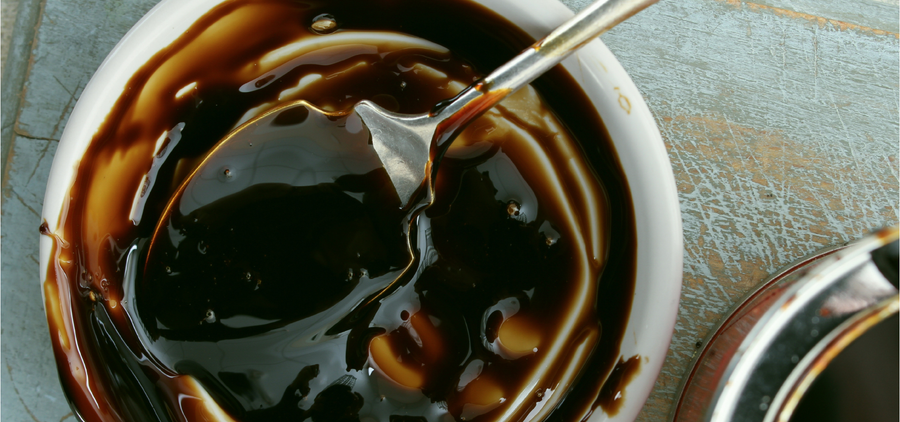
- Jasmine absolute is thick and deep orange to brown.
- Labdanum and many resins are dark, thick and very sticky.
- Vetiver is a thick, amber-colored oil that pours slowly.
- Patchouli darkens and deepens as it ages — good patchouli actually improves over the years.
If something that should be thick pours like water, or something that should be dark looks pale, it may be diluted. Always compare with the supplier's description and the batch documents.
5. Smell It Over Time
This is the real test. Dip a smelling strip, write the name and time on it, and smell it after a few minutes, after an hour, after a day and, for base notes, after several days.
- A good natural evolves. It shows different facets as it dries down: fresh, then floral, then woody or resinous. It feels alive.
- A poor or adulterated material often feels flat. It might be loud at first and then vanish, or smell like one simple, harsh note with no depth.
- A material past its prime smells "off." Oxidized citrus oils smell like furniture polish or turpentine. Old, badly stored materials can turn sour or rancid.
Your nose is your most important quality control tool. Train it every day, and it will become very hard to fool.
6. Compare, Compare, Compare
The fastest way to learn what quality smells like is to buy small samples of the same material from two or three suppliers and smell them side by side. Three lavenders. Three patchoulis. Three vetivers. The differences will surprise you — and after a few rounds, you'll know exactly which qualities you love and which ones you'll never buy again.
Comparing also teaches you that "different" isn't always "worse." Natural materials change with every harvest, region and distillation, like wine. Sometimes a material simply has a different character, not a lower quality.
7. Learn the Red-Flag Words
Be careful when a product is described as:
- "Fragrance oil" or "perfume oil": usually a ready-made blend, not a raw material.
- "Nature-identical" or "type": often a synthetic reconstruction sold under a natural-sounding name.
- "Inspired by" or "impression of": a copy of someone else's perfume.
- "Therapeutic grade": a marketing term with no official standard behind it.
- No botanical name, origin or documents: if the supplier won't tell you what it is, don't buy it.
Skip the Ready Fragrance Oils
Fragrance oils are finished blends that someone else has already composed, usually for candles, soaps and cosmetics. They're cheap, convenient and often smell pleasant. But they're not raw materials, and they won't teach you perfumery. You don't know what's inside, you can't take them apart, and many of them have low IFRA limits for fine fragrance. Mixing two fragrance oils together isn't composing a perfume, any more than playing two recordings at once is writing music.
And Please, No Dupes
"Dupe" blends — copies of famous perfumes sold as "inspired by" or "our version of" — are the one thing we'd ask you never to start with. God forbid. Copying another perfumer's work isn't learning. It skips every step that makes perfumery an art: the idea, the structure, the hundred failed versions and the one that finally works. Worse, it undermines the people who create, especially small independent perfumers. Your first perfumes should be yours, even if they're a little clumsy. Especially if they're a little clumsy.
What Is a Professional Accord or Base?
As you explore supplier catalogs, you'll find products called accords, bases or specialties. These are professional building blocks: ready-made blends created by fragrance houses or specialist suppliers to give one specific effect.
Some recreate notes that can't be extracted from nature, like lily of the valley, lilac or rain. Others replace materials that are now banned, endangered or unethical, like animal musks or certain natural extracts. Others simply save time, giving a perfumer a finished leather, amber or ambergris effect in a single ingredient. Used well, they're a legitimate and valuable tool, and many fine perfumes include them.
But we don't recommend them at the beginning. A ready accord does the thinking for you. If you buy an amber base, you'll never learn how an amber is built: which resin gives the darkness, which gives the sweetness, and how much of each makes it glow. Build your own accords from scratch first — starting with the exercises in our perfumer's starter kit. Once you truly understand the structure, professional bases become what they should be: a shortcut you choose, not a crutch you depend on.
Suppliers We Trust
These are suppliers we trust and work with. Each one provides proper documentation, and many sell small quantities that are perfect for learning.
- Eden Botanicals (USA): a wide range of natural essential oils, absolutes and CO2 extracts, many available as 1 ml samples or ready dilutions (attention: most of their dilutions are made with an oil carrier). Part of the French Biolandes group.
- Landema (France): professional-quality essential oils and natural extracts from the Biolandes group, sold in small quantities with no minimum order.
- Hermitage Oils (Italy): rare absolutes, essential oils, CO2 extracts and artisan perfumery materials, supplying perfumers since 1979.
- Aftelier (USA): a carefully curated selection of natural perfumery materials from natural perfumer Mandy Aftel.
- De Hekserij (Netherlands): a huge range of naturals and aroma molecules, however, we would mainly suggest buying molecules from them.
- De Kruiderie (Netherlands): a good source of natural and synthetic materials.
- Perfumer's Apprentice (USA): aroma molecules, bases and some naturals in small sizes, with IFRA certificates for each product.
- Fraterworks (New Zealand): aroma chemicals, fragrance bases and natural extracts, shipping internationally.
- PCW (France): naturals, aroma molecules and perfumery bases, with no minimum order.
Start with Stage 1 naturals from the natural specialists, and add aroma molecules later. See our easy materials for beginners for what to buy first.
Frequently Asked Questions
How can I tell if an essential oil is pure?
Check the botanical name, origin and extraction method, ask for documents such as a GC/MS report, compare the price and appearance with what's typical, and smell it on a strip over time. Comparing samples from several suppliers helps most.
Are expensive perfume ingredients always better?
No. A suspiciously low price is a warning sign, but a high price doesn't guarantee quality. Trust your nose and the documentation.
Can I make perfume with fragrance oils?
No. You can mix them, but you won't learn how perfumes are built, which won't make you a real perfumer either. We recommend starting with raw materials instead.
What is a perfume base or accord?
A ready-made professional blend that creates one specific effect, like lily of the valley or amber. Useful later, but not a good place to start learning.
Where should beginners buy perfume materials?
From specialist suppliers that provide IFRA certificates, safety data sheets and small sizes, like the ones listed above.
Final Thoughts
Good materials don't guarantee a good perfume, but poor materials guarantee a disappointing one. Read the label, ask for the paperwork, check the price, look, evaluate and compare. Skip the shortcuts in the beginning — no fragrance oils, no dupes, no ready accords — and learn the craft from the ground up. Your nose and your future perfumes will thank you.