The hardest part of starting perfumery isn't blending. It's shopping. You open a supplier's catalog, see three thousand materials with names like "Ambrocenide" and "Trimethylcyclopentenyl methylisopentenol," and quietly close the laptop. Or worse, you panic-buy forty materials, half of which you'll never use and one of which will make your whole apartment smell like a hospital for a week.
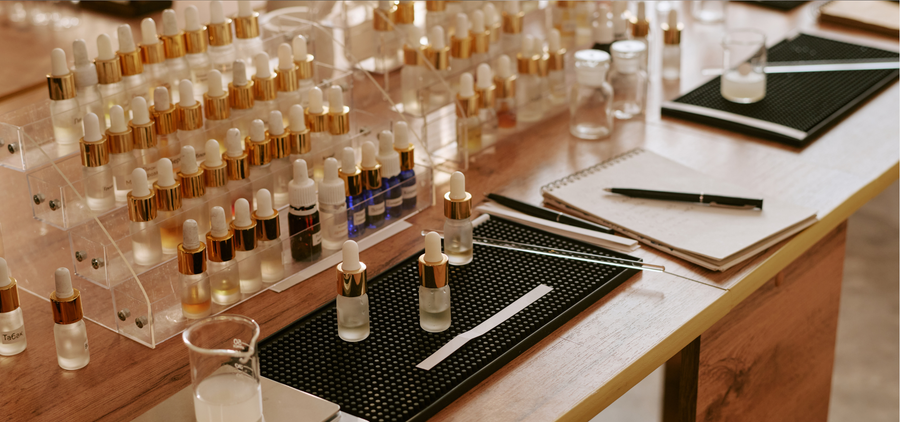
We've put together a starter kit of 30 materials, in two stages, so you can build real perfumes without emptying your bank account. Think of it as a painter's first box of colors: enough to paint almost anything, with room to grow.
Before you start, read our guide to setting up a home perfume lab.
Why Two Stages?
In our vision, it's best to start learning perfumery with naturals. It's like learning the original melody before you start improvising. Many aroma molecules were created to imitate, isolate or extend natural materials — so once you know lavender, rose or jasmine, you'll understand linalool, rose molecules or Hedione far better.
That's why this kit comes in two stages:
- Stage 1: the natural palette. 20 easy, affordable naturals to learn the basics of top, heart and base.
- Stage 2: the molecules. 10 forgiving aroma molecules to add once you know the naturals they came from.
Read more about this approach in easy materials for beginners.
How a Perfume Is Built
Most perfumes are described as having three layers, like a pyramid:
- Top notes: the first impression, bright and quick to fade — minutes to an hour.
- Heart notes: the character of the perfume, lasting several hours.
- Base notes: the foundation, lasting many hours or even days on fabric.
It's a simplification — real perfumes are more like a slowly changing landscape than a pyramid — but it's a very useful way to shop. A good starter kit needs a little of each.
Stage 1: The Natural Palette (20 Materials)
Top Notes
Top notes are the handshake. They're bright, light and evaporate quickly.
- Bergamot (FCF): the most useful citrus of all, fresh, floral and slightly bitter. If you only buy one citrus, make it this. Always choose FCF (bergapten-free).
- Sweet orange: juicy, round and cheerful, like breakfast on holiday.
- Lemon: sharp, sparkling and sunny. Cold-pressed lemon is restricted by IFRA because it can make skin sensitive to sunlight, so check its certificate or look for a distilled quality.
- Petitgrain: green, woody and slightly floral, from the leaves of the bitter orange tree.
- Lavender: herbal, fresh and floral, a bridge from top to heart.
- Pink or black pepper: spicy lift and energy, like a spark.
Heart Notes
The heart is the personality of the perfume, the part people remember.
- Geranium: rosy, green and minty — rose's practical, affordable cousin.
- Palmarosa: soft, rosy and a little grassy, gentle and easy to blend.
- Ylang-ylang: creamy, sweet and slightly spicy, a whole floral bouquet in one oil. Powerful and restricted by IFRA, so use it lightly.
- Clary sage: herbal, musky and slightly tea-like, with a soft ambery warmth.
- Ho wood: soft, sweet and floral-woody, rich in linalool. A gentle bridge between florals and woods.
- Optional — 1 ml of jasmine or rose absolute: the precious florals don't have to make your wallet bleed. A 1 ml sample, diluted to 10%, gives you 10 ml of working solution — plenty for an introduction.
Base Notes
Base notes are the foundation. They give depth and longevity and can last for a day or more.
- Cedarwood (Atlas or Virginia): dry, pencil-shaving woods. Instantly recognizable to anyone who ever sharpened a pencil in school.
- Australian sandalwood: soft and creamy, from cultivated trees. It is quite expensive, so you can start with a sample size.
- Amyris: soft, mild and gently woody, with a hint of balsamic sweetness. Inexpensive, forgiving and a lovely, quiet base.
- Vetiver: smoky, rooty and green, like earth after rain.
- Patchouli: earthy, dark and sweet. Not just for hippies.
- Frankincense: bright, lemony and resinous, the friendliest way into incense.
- Labdanum: dark, resinous and ambery, the heart of amber accords. Warning: extremely sticky.
- Benzoin: sweet, vanilla-like resin, warm and comforting.
Stage 2: The Molecules (10 Materials)
Once you know the melody, it's time to improvise. All ten of these are liquids that are easy to weigh and blend, and none of them will take over your formula if you add a little too much. Add them one at a time, and smell each one next to the natural it's connected to.
- Linalool: soft, fresh and floral, one of the main molecules in lavender and ho wood.
- Linalyl acetate: fresh and fruity, the other half of the lavender and bergamot story. Smell it side by side with the oils, and you'll hear one instrument playing inside the orchestra.
- Phenylethyl alcohol: the basic rose molecule, soft, petal-like and a little like rose water.
- Citronellol: the fresh, green side of rose. Compare it with your geranium.
- Geraniol: the sweet, rosy side of rose. Compare it with your palmarosa.
- Hedione: transparent, airy jasmine that makes almost any blend more radiant. It's like opening a window in a stuffy room.
- Benzyl acetate: fruity and jasmine-like, with a hint of pear — another piece of the jasmine puzzle.
- Iso E Super: velvety, transparent woods with a skin-like glow. Many perfumers call it their secret weapon.
- Sandalore: a mild, creamy sandalwood molecule that takes pressure off real sandalwood trees. Compare it with your Australian sandalwood.
- Habanolide: a soft, clean, skin-like musk, the smell of fresh laundry and warm skin.
Your First Exercise: A Natural Amber
An accord is a small blend of materials that creates a new, single impression — like mixing blue and yellow to make green. A classic first accord is a simple amber, and you can make it entirely from Stage 1 naturals:
- Labdanum and benzoin in roughly equal parts.
- A little Australian sandalwood or amyris for softness.
- Optionally, a drop of patchouli or vetiver for depth.
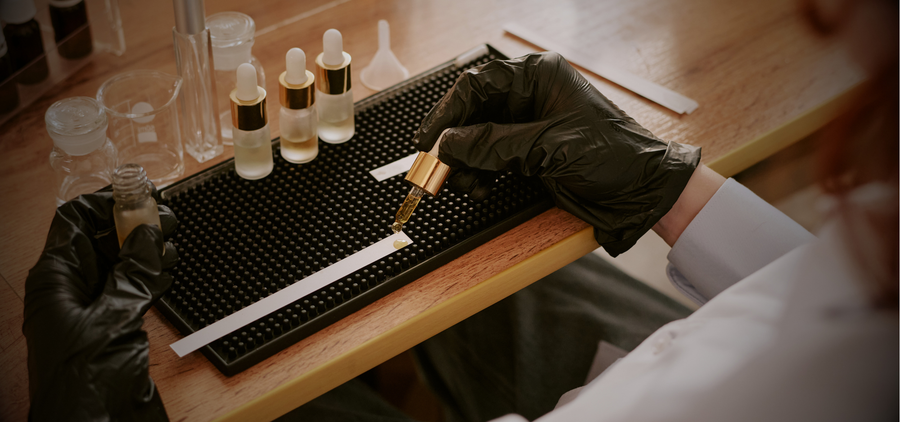
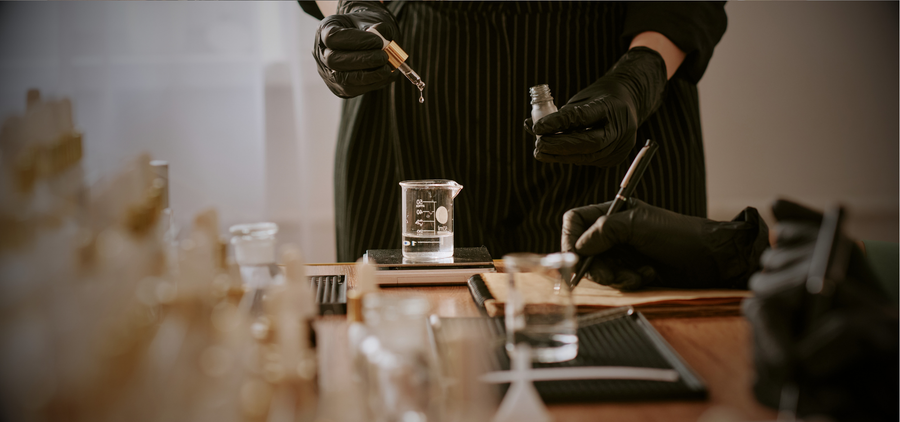
Weigh the materials, write down your formula, smell it on a strip over a few hours, then change one thing at a time. Add more labdanum and it gets darker. Add more benzoin and it gets sweeter. You'll learn more from ten versions of one accord than from ten different perfumes.
Your Second Exercise: Two Roses
First, build a natural rose from geranium and palmarosa, a drop of patchouli for depth and, if you have it, a drop of diluted rose absolute.
Then, in Stage 2, build a second rose from phenylethyl alcohol, citronellol and geraniol, with a touch of Iso E Super or Habanolide for skin and air. Smell the two side by side. The natural rose will feel richer and more alive; the molecular one will feel cleaner and more precise. Together, they'll teach you more about rose than either could alone.
Check Every IFRA Certificate
Perfume falls under IFRA Category 4, and even easy materials can be restricted. Limits are given as a percentage of the finished perfume, and they can vary a lot between suppliers and batches of the same material. We share some approximate examples in easy materials for beginners, but they're only a rough guide.
It's the responsibility of every perfumer to check the IFRA statement for each material directly from the supplier, and to make sure the finished perfume stays within every limit. Read more in what is IFRA?
Buying Tips
- Buy small: 1 to 10 ml/g at first. A little goes a long way.
- Buy 1 ml of the precious ones: absolutes are expensive but very concentrated, so a small sample is enough to learn from.
- Choose good suppliers: look for ones that provide IFRA certificates and safety data sheets.
- Buy pre-diluted: for very strong materials, if you're unsure.
- Check the carrier: if you buy a dilution, make sure it matches your perfume base. A dilution in oil, such as fractionated coconut oil or jojoba, won't mix properly with perfumer's alcohol, and a dilution in alcohol won't blend into an oil-based perfume.
- Add slowly: one new material at a time, and get to know it well before buying the next.
- Resist the shiny rare things: you don't need orris butter in week one. Promise.
For more on how these materials behave, see easy materials for beginners and difficult ingredients in perfumery.
Frequently Asked Questions
How many materials do I need to start making perfume?
Thirty is plenty: 20 well-chosen naturals to start, and 10 easy molecules to add later.
Should beginners start with naturals or synthetics?
In our view, naturals first. They're the original melody, and many molecules were created to imitate them. Once you know the naturals, molecules are much easier to understand and use well.
Do I need expensive absolutes to start?
No. Affordable oils like geranium and palmarosa teach you the basics of florals, and a 1 ml sample of an absolute is plenty for an introduction.
What's the easiest perfume to make first?
A simple amber accord of labdanum and benzoin, softened with a little sandalwood or amyris, is a classic first exercise.
Where should I buy perfume materials?
From suppliers that provide IFRA certificates and safety data sheets for their materials. See how to tell if a perfume ingredient is good quality for the suppliers we trust.
Final Thoughts
Thirty materials is enough to make dozens of good perfumes. Learn the naturals first, then the molecules. Learn each one alone, then in pairs, then in accords. Your palette will grow naturally from there, and one day you'll look at your shelf of little brown bottles and realize you're not a beginner anymore.