
Oakmoss: The Forest Floor in a Bottle
If you've ever smelled a vintage perfume and thought of damp bark after rain, you've probably met oakmoss. If you've ever walked through an old forest in autumn, with mist between the trees and your boots sinking slightly into the ground, you've definitely met its cousins. Oakmoss is the smell of shade. Of cool, wet stone. Of tree trunks that have been standing quietly for a hundred years and have seen things.
It's one of the oldest materials perfumers use, one of the most beautiful and still one of the hardest to replace. It's also one of our absolute favorites, which is why it appears in so many Dark Tales perfumes. Here's everything you need to know about it — and how it helps us tell our stories.
What Is Oakmoss?
Despite its name, oakmoss isn't a moss. It's a lichen, Evernia prunastri, a pale gray-green growth found mostly on oak trunks and branches, though it happily grows on other trees too. Most of it is gathered by hand in forests across southern Europe, the Balkans and North Africa.
Here's a fun fact for your next dinner party: a lichen isn't one organism but two. It's a partnership between a fungus and an alga living together so closely that they act like a single being. The fungus provides shelter; the alga makes food from sunlight. It's one of nature's oldest and most successful roommate arrangements.
Lichens grow incredibly slowly, sometimes only millimeters a year, and many are very sensitive to air pollution. Where you see lots of lichen on trees, the air is usually clean. So oakmoss is, quite literally, the smell of fresh forest air.
What Does Oakmoss Smell Like?
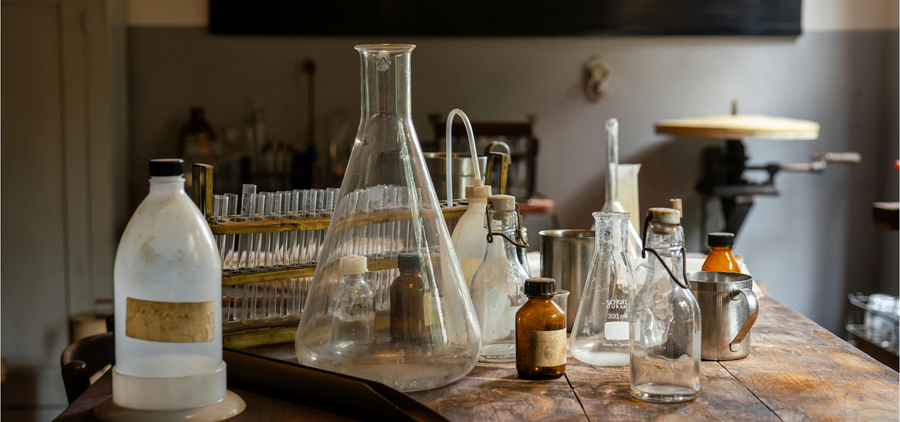
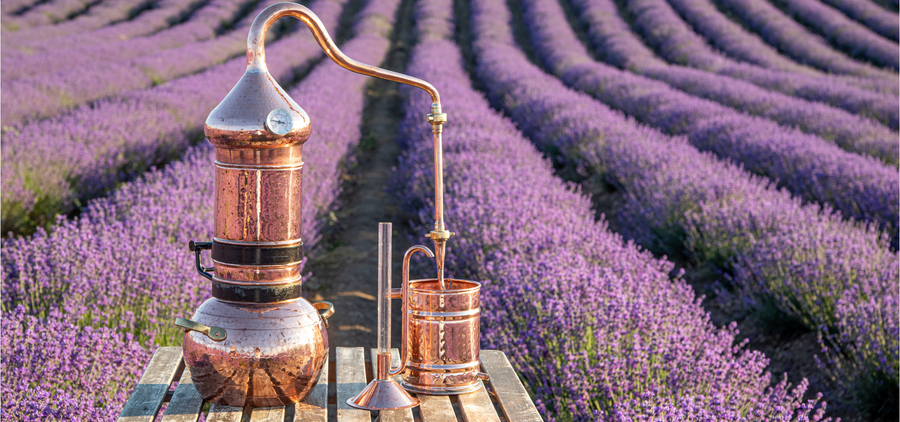
After harvest, oakmoss is dried and extracted with solvents into a resinoid or an absolute. What comes out smells like the forest floor. It's earthy and inky, with a damp woodiness, a salty, almost marine coolness and a faint, hay-like sweetness underneath. Some batches lean almost leathery; others smell of wet bark and shadows.
If you could bottle the moment you step out of the sun into a cool, dark forest, it would smell a lot like oakmoss.
A Short History of Oakmoss in Perfume
Oakmoss has been used for centuries. Lichens were used in medieval Europe in powders, hair preparations and medicines, and by the 19th century, oakmoss was firmly part of the perfumer's palette.
Its golden age came with two great fragrance families:
- Fougère: in 1882, Houbigant launched Fougère Royale, built around lavender, coumarin and oakmoss. It gave its name to a whole family of perfumes that still dominates men's fragrance today.
- Chypre: named after the island of Cyprus, the chypre family was defined in 1917 when François Coty launched his perfume Chypre, built on bergamot, labdanum and oakmoss. Bright on top, dark and mossy below, it became one of the most elegant structures in perfumery.
For most of the 20th century, oakmoss was everywhere — in classic perfumes worn by grandmothers, film stars and very well-dressed spies.
Oakmoss in Fragrance Families
Oakmoss is the backbone of both of these classic families. In a chypre, it sits under bergamot and labdanum, with bright citrus on top and dark moss and resin below — like sunlight on the surface of a forest pond. In a fougère, it meets lavender and coumarin for a clean, herbal, slightly powdery feel, like a freshly shaved jaw and a crisp shirt.
It works outside those families too. A little oakmoss under a floral, a woody or an amber scent gives it weight and keeps it from going flat. It's like adding a bass line to a melody: you may not notice it, but you'd miss it if it were gone.
DT & Oakmoss: How It Tells Our Stories
We use oakmoss a lot at Dark Tales. We buy a high-quality absolute because cheaper material loses the dark, damp edge that makes oakmoss worth using.
For a perfume house built on dark stories, oakmoss is more than a base note. It's a storyteller in its own right. Most of our tales happen in places that time has forgotten — old houses, ruined ballrooms, deep forests — and oakmoss is the smell of those places. It's the green that creeps over stone when nobody's looking. The damp that settles into a house after its people are gone. The cool ground beneath the trees where old things are buried.
In storytelling terms, oakmoss does three things for us:
- It sets the scene. One breath of oakmoss and you're outdoors, in shade, somewhere old. It's the fastest way to say "forest" or "forgotten place" without a word.
- It carries the passage of time. Moss grows slowly. It only covers things that have been left alone for years. When oakmoss appears in the base of a perfume, the story suddenly feels older.
- It adds the shadow. Even in our sweetest or brightest perfumes, oakmoss keeps something cool and dark underneath — the reminder that every tale has a darker chapter.
Sometimes it forms the backbone of a full chypre structure. Other times it's barely there, a shadow under something modern that you'd only notice if it were gone. Either way, it usually does the same job for us. It pulls a fragrance down into the forest, somewhere cool, quiet and a little bit haunted.
Dark Tales Perfumes With Oakmoss
Oakmoss appears in four of our current perfumes, and it plays a different role in each story.
Fern Valley
Oakmoss at home on the oak trees. Fern Valley is the most literal of our oakmoss stories. Morning mist sits low between the hills, ferns grow waist-high and still wet from the night's rain, and old oaks lean over the paths, their bark dark with water. Here, oakmoss is simply where it belongs: clinging to those ancient trees. With bergamot, holy basil and ozone on top, humid earth and ferns in the heart, and wet woods and sandalwood around it, it becomes the cool, green smell of a valley right after a storm. Read more in petrichor.
Macabre
Oakmoss as the earth beneath the dance floor. In Macabre, skeletons in powdery ball gowns waltz at midnight in a decaying ballroom, and the story speaks of the sweet, spicy scent of the earth mingling with the musty aroma of forgotten costumes. That earth is where oakmoss lives. It sits in the base with dark patchouli, guaiacwood, frankincense, vetiver and labdanum, beneath black pepper, clove, Bulgarian rose and Egyptian jasmine. This is oakmoss in its classic chypre role — the dark shadow under a beautiful rose — and, in our story, the grave that the dancers have climbed out of for one more night.
Haunted Mansion
Oakmoss as the damp in the walls. At the end of a forgotten road stands a mansion abandoned after its owners vanished. Decades later, candlelight still moves behind the windows, dust covers the floors and the clocks remain frozen at the hour the household disappeared. Oakmoss is what time leaves behind in a house like that: the damp creeping up the walls, the moss on the stones outside, the slow return of the forest. In the base, with cedarwood and aged vanilla, it turns the powdery neroli, tobacco and cocoa beans above it into something old, quiet and slightly eerie.
Witching Hour
Oakmoss as the forest floor at twilight. The Witching Hour begins as twilight falls and cloaked figures weave their sweetened spells beneath the moon. Oakmoss is the ground they stand on. With fir balsam, black spruce, cypress and powder in the base, under cocoa, coffee bean, gentle smoke, tonka and fermented mate, it brings the cool, mossy floor of a forest at dusk — the hints of autumn leaves and the fleeting forest-mushroom phase some people notice on their skin. It's the threshold between the cozy and the uncanny.
From Our Archive
Oakmoss has been part of Dark Tales since our earliest perfumes. These past and limited editions are no longer available (but who knows? — maybe they'll return one day), but each one shows another side of how oakmoss can tell a story.
Forest Witch
Oakmoss as the witch's own ground. Originally part of our Curious collection (2019–2022), Forest Witch is a walk deep into the woods, where the path disappears and the trees grow older. Bright neroli and bergamot glow at the start like a spell being lit, then fade into damp oakmoss — the roots, soil and quiet power of the witch's domain. It's oakmoss at its most classic: a clean, glowing citrus floral resting on a true chypre backbone, like morning sunlight over a damp forest floor.
Crimson
Oakmoss as decayed grandeur. Also from our Curious collection, Crimson was inspired by the gothic romance film Crimson Peak. A sharp, green, almost otherworldly fennel opening gives way to a deep, velvety red rose, evoking wilted petals and antique halls. Underneath, damp, earthy oakmoss entwines with a shadowy dark vanilla: cold stone corridors, a crumbling mansion and the lingering warmth of something forbidden. Here, oakmoss is the ghost story itself — the past seeping up through the floorboards.
Serpent's Kiss
Oakmoss as the floor of Eden. In this limited edition, Eve's fingers hover over the forbidden fruit as the serpent's silken voice draws her closer. Green mandarin, white grapefruit and basil open fresh and fruity, cannabis and green apple bring a green, waxy heart, and myrrh, oakmoss, white musk and light sandalwood settle underneath. As the scent moves slowly, like a snake, oakmoss brings the subtle undertone of a sweet, damp forest floor — the shadow beneath paradise, just before the first bite.
Rose Trollogy
Oakmoss as the trolls' bed. Rose Trollogy began as an inside joke in our perfumer's lab, when "Rose Trilogy" was accidentally mispronounced. The story grew into the trolls of Thornshade Garden: cunning caretakers with bark-like skin who slumber by day under mounds of moss and emerge at night to tend roses of impossible beauty. Green ivy, pink pepper and dewy rose petals open into black rose, geranium and dark chocolate, over oakmoss, patchouli, aged oud and damp earth. Oakmoss is, quite literally, where the trolls sleep — the wild, shadowy ground beneath a playful rose.
Ancient Woods
Oakmoss as the oldest part of the forest. From our Arina Franzén | Botanical Perfumery line, Ancient Woods smells like the oldest part of the forest: resin on spruce bark, frankincense smoke, damp oakmoss and the waxy sweetness of beeswax. Clary sage and lemon keep the opening bright before it settles with copaiba balsam, palo santo, black spruce, sandalwood and spikenard into a soft, grounding, balsamic base. Here, oakmoss is time itself — calm, quiet and very old.
The Challenges of Using Oakmoss
Oakmoss is also one of the most tightly regulated materials in perfumery. Some people are sensitive to it: two of its natural compounds, atranol and chloroatranol, are known skin allergens. Because of this, the International Fragrance Association (IFRA) limits natural oakmoss to 0.1% of a finished perfume. That's a very small amount to work with — a pinch, not a handful.
The rules changed perfume history. Many classic chypres had to be reformulated, and some vintage perfumes no longer smell the way they once did. Perfume collectors still argue passionately about it. Read more about how these rules work in what is IFRA? and fragrance allergens explained.
Those limits have pushed perfumers toward refined, low-atranol oakmoss, made with modern distillation techniques that remove most of the problem compounds, and toward synthetic substitutes. These get close to the original smell while staying within the rules.
Oakmoss vs. Treemoss
Oakmoss has a close relative: treemoss, Pseudevernia furfuracea, a lichen that grows mostly on pine and other conifers. Treemoss smells similar but sharper, more resinous and more piney, with less of oakmoss's soft, inky depth. It's also restricted by IFRA. Perfumers often use the two together, like two instruments playing in harmony.
Why Perfumers Love Oakmoss
Even with the restrictions, perfumers keep reaching for it because of its:
- Depth: It anchors a fragrance and gives the lighter top and heart notes something to rest on.
- Versatility: It belongs in chypres and fougères, but it also works in florals, woods and ambers.
- Vintage feel: Few materials say "classic perfume" as quickly. Even in a modern scent, a touch of oakmoss adds a sense of history.
- Atmosphere: It doesn't just smell nice. It smells like a place.
The Future of Oakmoss
The rules may get stricter, but the tools keep getting better. Newer extraction methods remove more of the problem compounds while keeping oakmoss's character, and new synthetics fill in where the natural material can't go. We don't see oakmoss leaving perfumery anytime soon. The forest is patient. So are we.
Frequently Asked Questions
Is oakmoss a moss?
No. Oakmoss is a lichen, a partnership between a fungus and an alga, that grows mainly on oak trees.
What does oakmoss smell like?
Earthy, inky, damp and woody, with a cool, slightly salty edge and a faint sweetness. Like a forest floor after rain.
Why is oakmoss restricted?
It contains natural allergens, atranol and chloroatranol, so IFRA limits natural oakmoss to 0.1% of a finished perfume.
What is a chypre perfume?
A classic fragrance structure built on bergamot, labdanum and oakmoss: bright on top, dark and mossy underneath.
Which Dark Tales perfumes contain oakmoss?
Fern Valley, Macabre, Haunted Mansion and Witching Hour are currently available. Forest Witch, Crimson, Serpent's Kiss, Rose Trollogy and Ancient Woods also featured oakmoss and are now part of our archive.
Closing Thoughts
Oakmoss isn't flashy, and it's rarely the first thing you notice in a perfume. But it's often the reason a scent feels finished, lasts on the skin and stays in your memory. It's the quiet friend at the party who turns out to have the best stories.
If you love chypres or fougères, or you're just curious what "mossy" actually smells like, oakmoss is well worth getting to know. Start with one of the perfumes above — or take a walk in an old forest, touch the bark of an oak tree and breathe in.