"All natural" sounds wonderful on a label. It conjures images of sunlit fields, wooden barrels and kind-faced farmers. "Synthetic," on the other hand, sounds like something made in a gray factory by people in hazmat suits. Marketing has trained us to think one is good and the other is suspicious.
The reality is far more interesting. Both natural materials and aroma molecules have real strengths and real limits, and most fine perfumes — including the most expensive and admired ones in the world — use both. Here's how they actually compare, and why the debate is a lot less black and white than it seems.
What Counts as Natural?
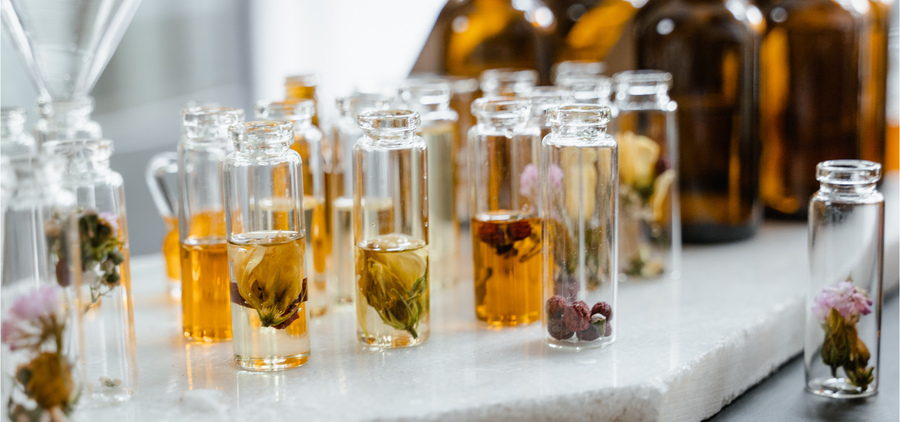
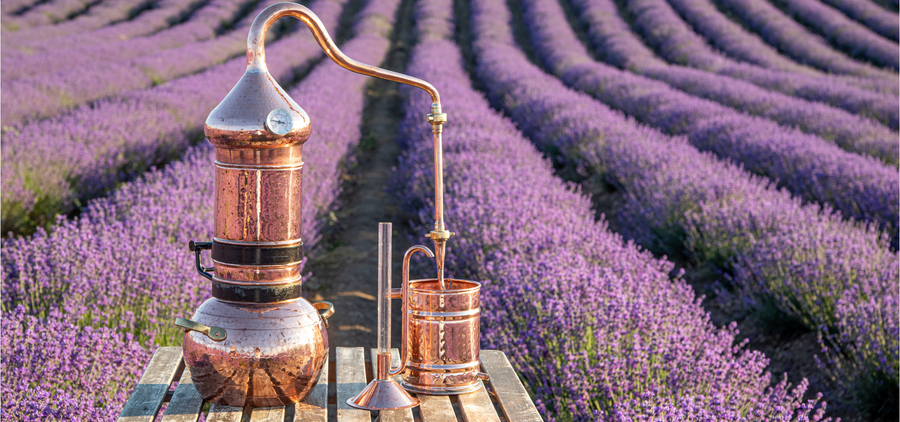
Natural perfume materials come straight from plants (and, historically, animals) through methods like distillation, pressing or solvent extraction. Essential oils, absolutes, resinoids, CO2 extracts and tinctures are all naturals. Each one is a complex mixture of dozens or hundreds of molecules — rose oil alone contains several hundred. You can read how they're made in the art of extraction.
What Counts as Synthetic?
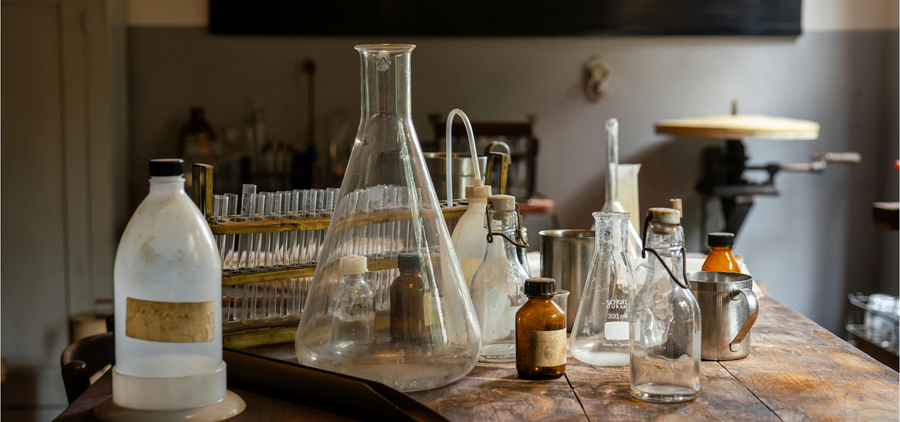
Synthetic materials are single molecules made by chemistry. Some are identical to molecules in nature, like vanillin or coumarin. Others are new to nature, like Iso E Super or Ambrox. Isolates, single molecules separated from a natural material, sit somewhere in between. And here's a twist: many "synthetics" are actually made from natural starting materials like pine trees, citrus peels or clary sage.
How They Compare
- Scent: Naturals are complex and alive, and they change on skin over hours, like a conversation. Synthetics are cleaner and more precise, like a single, perfectly tuned note, and they can create smells no plant gives, like rain, metal or fresh laundry.
- Longevity: All-natural perfumes are usually softer and fade sooner. Many synthetics, especially musks and woods, last much longer and project further.
- Consistency: Naturals vary with each harvest, like wine. A rainy summer in Bulgaria changes the rose. Synthetics smell the same every batch.
- Cost: Some naturals cost tens of thousands of euros per kilo. Most synthetics are far cheaper, though a few specialty molecules are expensive too. See the most expensive perfume ingredients.
- Range: Many flowers can't be extracted at all, so lily of the valley, lilac and freesia exist only as synthetic reconstructions.
Five Common Myths
1. "Natural means safe."
Poison ivy is natural. So is arsenic. In perfumery, many of the strongest allergens are natural. Oakmoss, cinnamon bark, clove and many citrus oils are tightly restricted by IFRA. Essential oils contain the same molecules, such as linalool, limonene, eugenol and citral, that have to be declared as fragrance allergens.
2. "Synthetics are toxic chemicals."
Everything is chemicals, including rose oil, water and you. Perfume synthetics are safety-assessed, and the ones found to be harmful are restricted or banned.
3. "Synthetics are cheap shortcuts."
Some of the most admired perfumes in history were built on synthetics. Chanel No. 5 is famous for its aldehydes. Synthetics are a creative tool, not a way to cut corners — like a painter using a new color.
4. "Natural is always more sustainable."
Not always. Overharvesting has threatened sandalwood, rosewood, agarwood and frankincense trees. A lab-made molecule can sometimes take pressure off a species in danger. That said, some synthetics are made from petrochemicals, so the answer depends on the material.
5. "Natural perfumes smell more authentic."
A real rose absolute is breathtaking. But a natural "rain," "old paper" or "cold stone" note doesn't exist. Authenticity in perfume is about the result, not the source.
The Case for Naturals
Let's be fair: naturals have a magic that's hard to fake. A good jasmine absolute contains hundreds of molecules in a balance no lab can perfectly copy. It has tiny imperfections, unexpected facets and a sense of life. Natural materials connect perfume to places, seasons, farmers and traditions — the dawn harvest in Grasse, the rose valleys of Bulgaria, the frankincense trees of Oman. That story matters.
The Case for Synthetics
And synthetics have their own magic. They let perfumers paint with light, air, metal and clean skin. They protect endangered species. They make perfume more consistent, longer-lasting and, often, safer. And they open the door to completely new smells that no perfumer of the 1800s could have imagined.
Why the Best Perfumes Use Both
Naturals give a perfume depth, texture and a sense of life. Synthetics give it structure, radiance, longevity and new ideas. Together they can do things neither can do alone. It's like cooking: you need both fresh ingredients and good technique.
Our main line is made with organic essential oils, absolutes and CO2 extracts alongside aroma molecules, so every perfume has both the living depth of naturals and the precision of modern perfumery. A few examples of notes that only that combination makes possible:
- Haunted Circus: rubber balloons, theater makeup and a fog machine over earthy autumn leaves.
- Fern Valley: the ozone and petrichor of a forest after the rain.
- Gothika: century dust and cold stone softened by candle wax and white rose.
For those who prefer it, our Arina Franzén | Botanical Perfumery line is fully natural.
How to Choose for Yourself
- If you love depth and change: look for perfumes rich in naturals.
- If you want longevity and projection: mixed or synthetic-rich perfumes usually last longer.
- If you have sensitive skin: don't assume natural is gentler. Check the allergen list and patch test.
- If you care about sustainability: look at how a brand sources, not just whether it says "natural."
Frequently Asked Questions
Are natural perfumes better than synthetic ones?
Not automatically. Both have strengths. Most fine perfumes combine them.
Are natural perfumes safer?
Not necessarily. Many natural materials contain strong allergens and are tightly regulated.
Do natural perfumes last as long?
Usually not. All-natural perfumes tend to be softer and fade sooner than perfumes with aroma molecules.
Are Dark Tales perfumes natural?
Our main line combines naturals and aroma molecules. Our Arina Franzén | Botanical Perfumery line is fully natural.
Final Thoughts
Natural vs. synthetic is the wrong question. The better one is whether a material is safe, ethical and right for the perfume. Judge a perfume by how it smells and how it's made, not by a single word on the label. And if anyone tells you synthetics are "fake," ask them to bottle the smell of rain naturally. We'll wait...