Imagine standing in a jasmine field in Grasse at four in the morning. It's still dark. The air is cool and damp, and it's so thick with scent that it feels almost like walking through honey. Around you, pickers move quietly between the bushes with baskets, plucking tiny white flowers one by one before the sun rises and steals their scent. By breakfast, the flowers will be on their way to be extracted. By the end of the season, millions of them will have become a few precious kilos of something golden, sticky and impossibly beautiful.
That's a floral absolute. It's the most concentrated form of a flower's scent, and it smells closer to the living flower than almost anything else a perfumer can use. It captures flowers too delicate to survive distillation — jasmine, tuberose, mimosa, narcissus — and it's at the heart of some of the most beautiful perfumes ever made. This guide explains what absolutes are, where they came from and what each of the main floral absolutes smells like.
What Is a Floral Absolute?
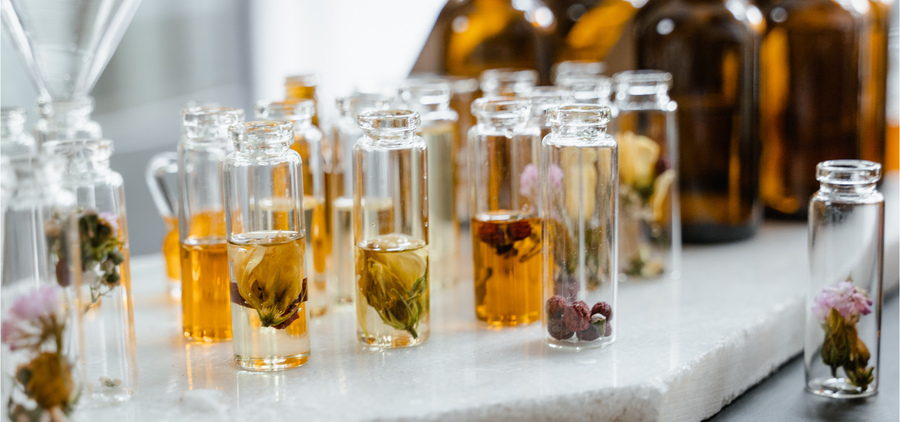
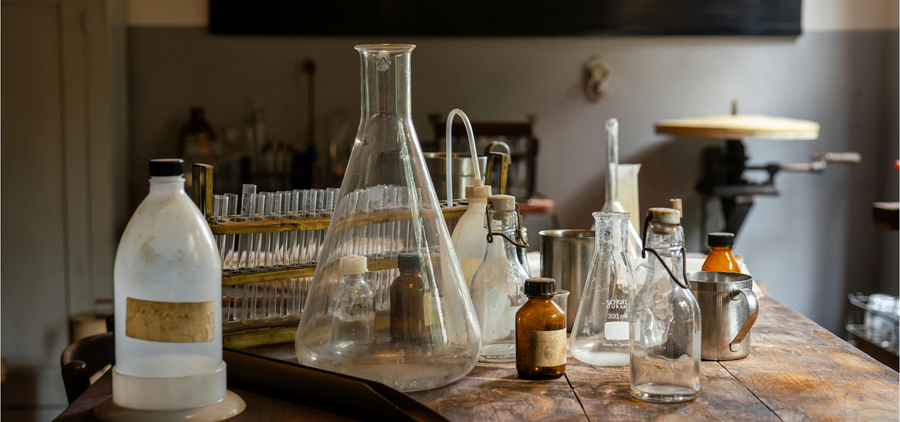
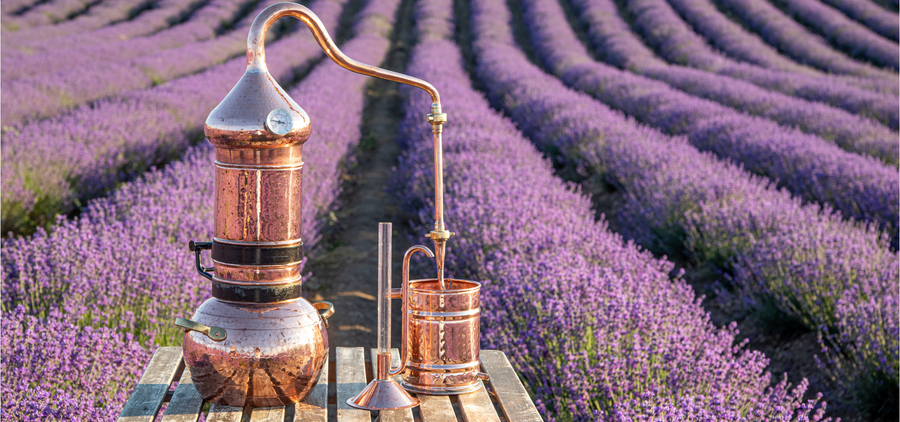
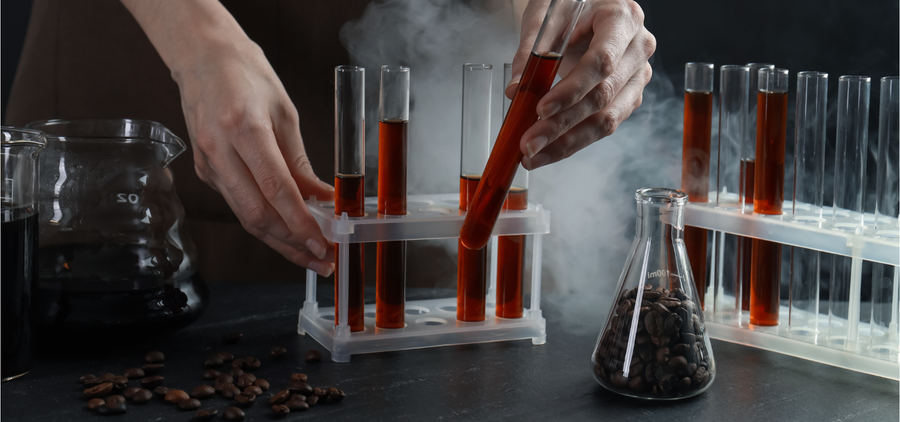
An absolute is made by solvent extraction rather than distillation. Freshly picked flowers are washed with a solvent such as hexane, which dissolves their scent along with natural waxes and pigments. When the solvent is removed, what's left is a solid, waxy mass called a concrete. The concrete is then washed with alcohol, which takes up the fragrant part and leaves the waxes behind. Once the alcohol is evaporated, the result is the absolute.
Because no high heat is involved, absolutes keep the delicate, heavy and waxy parts of a flower's scent that would be lost or changed in a still. That's why jasmine absolute smells lush and full, while the few jasmine distillates that exist are thin by comparison. Absolutes are usually thick, deeply colored liquids — amber, orange, deep red, sometimes almost black — and they're very strong. Most are used in perfume at a fraction of a percent. A single drop on a smelling strip can scent a whole room.
Essential oils and absolutes from the same plant can smell very different. Rose otto, made by distillation, is bright and fresh. Rose absolute is deeper, sweeter and more honeyed. Neroli and orange blossom absolute come from the same blossoms but are two distinct materials, like siblings who grew up in the same house and turned out completely different.
A Short History
For centuries, the only way to capture the scent of delicate flowers was enfleurage, which pressed petals into odorless fat until it was saturated with their scent. The center of this work was Grasse, in the south of France. The town's perfume industry began in the 17th century, when its tanners started scenting leather gloves to mask the smell of the tanning process. (Leather gloves were fashionable. Smelling like a tannery was not.) The surrounding hills turned out to be ideal for jasmine, tuberose, rose and orange blossom, and Grasse became the flower capital of perfumery.
In the late 19th century, Grasse producers began using volatile solvents to extract flowers. Solvent extraction gave higher yields, cost far less labor and worked on flowers that enfleurage couldn't handle well. By the early 20th century it had largely replaced enfleurage, and absolutes became the standard natural floral materials in fine perfume. In 2018, the perfume know-how of the Grasse region, from growing the flowers to composing perfumes, was added to UNESCO's list of the Intangible Cultural Heritage of Humanity.
Today, most floral absolutes are produced in India, Egypt, Morocco, Bulgaria, Turkey, China and the Comoros, while Grasse still produces small amounts of its most famous flowers.
How to Smell an Absolute
If you ever get the chance to smell a pure absolute, here's a tip: don't stick your nose right into the bottle. Absolutes are so concentrated that they can smell harsh, medicinal or even unpleasant. Jasmine absolute straight from the bottle can smell surprisingly animalic. Tuberose can smell like rubber. Narcissus can smell like a barn.
Dip a paper strip, wave it gently a few centimeters from your nose and give it time. Over minutes and hours, the absolute will open up and show you the flower hiding inside. It's one of the most magical things in perfumery.
The White Florals
White flowers are the heart of classic floral perfumery. Most of them share a heady, creamy, slightly animalic side that comes from a molecule called indole, which also appears in much less pleasant places in nature. (We'll leave that to your imagination.) In small amounts, indole is what makes white flowers smell alive and sensual rather than clean.
Jasmine Grandiflorum
Jasminum grandiflorum is the jasmine of Grasse and the most important floral absolute in perfumery. It smells rich, sweet and warm, with fruity, tea-like and waxy facets and a distinct animalic edge. Good jasmine absolute feels almost three-dimensional: honeyed at first, then green, then deeper and more skin-like as it dries down. Perfumers sometimes call jasmine "the king of flowers," with rose as the queen.
Jasmine came to Europe from Asia and the Middle East, and it was being grown around Grasse by the 17th century. The flowers are still picked by hand at dawn, when their scent is strongest, and it takes several million flowers to make a single kilo of absolute. Today most jasmine grandiflorum absolute comes from India and Egypt, while true Grasse jasmine is rare and very expensive.
Jasmine Sambac
Jasminum sambac is the jasmine of South and Southeast Asia. Compared with grandiflorum, it's fresher, greener and fruitier, with notes of tea, banana and orange blossom, and it's usually even more indolic. It's the national flower of the Philippines, where it's called sampaguita, and in India it's woven into garlands and worn in the hair. It has also been used for centuries to scent jasmine tea in China.
Tuberose
Polianthes tuberosa is one of the most intense flowers in perfumery. Its absolute is creamy, buttery and narcotic, with coconut-like, rubbery and slightly camphorous facets, and an earthy depth underneath. It's often described as the most sensual of all white flowers. In some old European traditions, young women were warned not to smell tuberose in the evening garden, in case it made them lose their heads. (We can't confirm or deny.)
Tuberose is native to Mexico, where the Aztecs grew it and called it omixochitl, or "bone flower," after its waxy white petals. Spanish explorers brought it to Europe in the 16th century, and it soon became a favorite of French royalty and a key crop in Grasse. Its name has nothing to do with roses; it comes from the Latin for "tuberous," after its bulb-like root. Tuberose keeps producing scent after it's picked, which made it ideal for enfleurage. Most tuberose absolute today comes from India.
Orange Blossom
Orange blossom absolute comes from the flowers of the bitter orange tree, Citrus aurantium. It smells sweet, honeyed and warm, with a slightly indolic heart and a grapey, almost fruity note from a molecule called methyl anthranilate. It's richer and heavier than neroli, the steam-distilled oil from the same blossoms, which is fresher and more citrusy.
The name neroli is said to come from Anne-Marie Orsini, a 17th-century princess of Nerola in Italy, who scented her gloves and bath with orange blossom oil. Orange blossom has long been a symbol of purity and was traditionally worn by brides. Today the main producers are Tunisia, Morocco and Egypt, and orange flower water, a by-product of distillation, is widely used in Middle Eastern and Mediterranean cooking.
Ylang-Ylang
Cananga odorata grows in tropical Asia and the Indian Ocean islands. Its absolute is creamy, sweet and slightly spicy, with banana, custard and balsamic notes, and a heady floral warmth that sits between jasmine and tuberose. It's softer and rounder than ylang-ylang essential oil.
The name comes from Tagalog, the language of the Philippines. Today most ylang-ylang comes from the Comoros, Madagascar and Mayotte. In the 19th century it was a key ingredient in Macassar oil, a popular men's hair oil in Victorian Britain — so popular, and so greasy, that people put cloths over the backs of their chairs to protect them. Those cloths are still called antimacassars. Your grandmother's armchair may have one.
Gardenia
Gardenia smells lush, creamy and green, with mushroomy, coconut-like and slightly indolic notes. Natural gardenia absolute is extremely rare and was historically made in tiny amounts by enfleurage. Almost every gardenia note in perfume today is a reconstruction, built by perfumers from other materials.
Tiaré
Tiaré (Gardenia taitensis) is the national flower of Tahiti. Its scent is creamy, sweet and slightly spicy, softer and sunnier than true gardenia. In Polynesia, the flowers are traditionally soaked in coconut oil to make monoï, which has its own protected appellation. Tiaré absolute exists but is rare.
Frangipani
Frangipani, or plumeria, smells creamy, fruity and tropical, with notes of peach, apricot and coconut. Its absolute is mostly produced in India. The name is said to come from the Frangipani family of Italy, one of whom is credited with creating a scented glove perfume in the 16th century; the flower was later named after the perfume because it smelled so similar.
Champaca
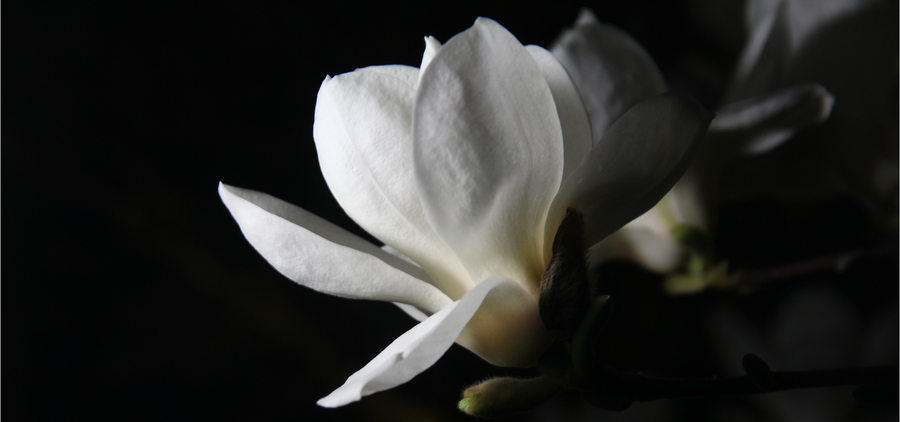
Magnolia champaca is a tree from India and Southeast Asia, related to magnolia. Champaca absolute is warm, fruity and tea-like, with apricot, orange blossom and slightly spicy, leathery notes; hay and tobacco in the drydown. In India, the golden flowers are sacred, offered in temples and woven into garlands, and they're among the most prized ingredients in traditional Indian perfumery.
The Roses
Rose Centifolia
Rosa centifolia, the "hundred-petaled" rose, is the rose of Grasse and Morocco. It's harvested in May, which is why its absolute is often called rose de mai. It smells honeyed, soft and powdery, with a light, fresh, slightly peppery side. Rose de mai from Grasse is one of the most expensive floral materials in the world.
Rose Damascena
Rosa damascena, the Damask rose, is the rose of Bulgaria and Turkey. It's used both for rose otto and rose absolute. Its absolute is deeper, spicier and more wine-like than centifolia, with honey and clove notes. Bulgaria's Valley of the Roses, near Kazanlak, has produced rose oil for centuries, and the harvest still happens by hand in the early morning, with an annual rose festival to celebrate it.
Roses have been distilled for over a thousand years. The Persian physician Avicenna is often credited with perfecting the distillation of rose water in the 11th century, and roses have been central to Middle Eastern perfumery ever since. For the darker side of the rose, read black rose: dark rose perfumes.
The Powdery and Golden Florals
Osmanthus
Osmanthus fragrans has tiny orange or golden flowers with a surprisingly complex scent. Its absolute smells of apricot and peach, with leathery, suede-like notes, a tea-like warmth and a violet-like powderiness. It's one of the most expensive floral absolutes and comes almost entirely from China, where osmanthus has been loved for over two thousand years. The city of Guilin takes its name from the flower — it means "forest of osmanthus" — and the blossoms are still used to scent tea, wine and sweets. In autumn, the whole city smells of it.
Mimosa
Mimosa absolute comes from Acacia dealbata, a tree native to Australia that was brought to the French Riviera in the 19th century. It smells powdery, honeyed and green, with a soft almond-like note and a slightly waxy, cucumber-like freshness. The trees bloom in late winter, turning the hills around Tanneron bright yellow, and the town of Mandelieu still holds a mimosa festival every February. It's sunshine in the middle of winter.
Cassie
Cassie comes from Acacia farnesiana, a close relative of mimosa. Its absolute is warmer and spicier, with powdery, violet-like, slightly animalic notes. The plant is named after the Farnese gardens in Rome, where it was grown in the 17th century, and it was once a major crop in Grasse. Today it's rare.
Boronia
Boronia megastigma is a small shrub from Western Australia with brown and yellow flowers. Its absolute is fruity and tea-like, with a strong violet note, because it's unusually rich in beta-ionone, the molecule behind the scent of violets. It's rare, very expensive and much loved by perfumers. See the most expensive perfume ingredients.
Violet
Violet flower absolute, from Viola odorata, was once produced around Toulouse and Hyères in France. It smells soft, powdery and sweet. It took an enormous amount of flowers to make very little absolute, and in 1893 chemists discovered ionones, the molecules responsible for its scent. Synthetic violet quickly replaced the natural material, and real violet flower absolute is now almost impossible to find. Violet leaf absolute, by contrast, is still widely used. It smells nothing like the flower: it's sharply green, with notes of cucumber and freshly cut grass (in high concentrations it can almost become a swamp).
Fun fact: violets contain ionones that temporarily switch off our ability to smell them. Sniff a violet, and after a moment the scent seems to disappear — then comes back. It's a flower that plays hide-and-seek.
The Green, Honeyed and Unusual Absolutes
Narcissus
Narcissus absolute is made from Narcissus poeticus, the poet's daffodil, which still grows wild on the Aubrac plateau in southern France. It's one of the strangest and most beautiful floral materials: green, hay-like and earthy, with leathery, animalic and slightly smoky depths and only a hint of sweetness. It's very expensive and used in tiny amounts. In Greek myth, Narcissus fell in love with his own reflection and was turned into this flower — a cautionary tale for anyone who spends too long in front of the mirror.
Jonquil
Jonquil, Narcissus jonquilla, is a close relative of narcissus. Its absolute is sweeter, more honeyed and more floral, with the same green, hay-like character but less of the leathery edge. Like narcissus, it's rare and costly.
Hyacinth
Natural hyacinth absolute is one of the rarest materials in perfumery, made in very small amounts. It smells green, sappy and earthy, with a sweet, heady floral heart. Most hyacinth notes in perfume are reconstructions.
Broom
Broom, or genêt (Spartium junceum), is a Mediterranean shrub with bright yellow flowers. Its absolute smells of honey, hay and warm grass, with a slightly animalic, beeswax-like undertone. It was once common in classic French perfumes.
Linden Blossom
Linden, or lime tree, blossom absolute smells soft, honeyed and green, with a gentle floral sweetness and a hint of hay. It's familiar to many people from linden blossom tea, which has been drunk across Europe for centuries, usually by grandmothers who know best.
Lavender
Lavender absolute is quite different from lavender essential oil. It's darker, sweeter and more herbaceous, with hay-like and tobacco-like notes from coumarin, and less of the fresh, camphorous side of the oil. Most of it comes from Provence.
Carnation
Carnation absolute, from Dianthus caryophyllus, smells spicy and clove-like because it's rich in eugenol, the main molecule in clove. Underneath is a soft, sweet floral note. It was hugely popular in early 20th-century perfumes, when a carnation in the buttonhole was the height of style. Natural carnation absolute is now rare, and most carnation notes are built from clove and floral materials.
Lotus
Lotus absolutes come in several kinds. Pink and white lotus (Nelumbo nucifera) are sacred in India and in Buddhism, where the flower rising clean from muddy water stands for purity. Their absolutes are soft, watery and slightly powdery, with a sweet, almost fruity floral note. Blue lotus (Nymphaea caerulea), actually a water lily, was sacred in ancient Egypt and appears in tomb paintings and offerings. Its absolute is sweeter and more honeyed.
Honeysuckle
Natural honeysuckle absolute exists but is rare. It smells sweet, nectar-like and green, with a light, fresh floral note — like the flowers children pull from the hedge to suck the nectar out. Most honeysuckle in perfume is a reconstruction.
Karo Karoundé
Karo karoundé (Leptactina senegambica) is a shrub from West Africa, mostly Guinea. Its absolute is one of the most unusual floral materials: rich and white-floral, but with leathery, animalic, spicy and slightly fruity notes. It's rare and highly valued by perfumers looking for something different.
The Flowers That Can't Be Extracted
Many popular flowers give no usable natural extract. Perfumers call them "mute" flowers: they smell wonderful on the plant, but their scent either breaks down during extraction or exists in such tiny amounts that no method can capture it. Lily of the valley, lilac, freesia, wisteria, peony, sweet pea and cyclamen are all mute. Every one of these notes in perfume is a reconstruction, often made with the help of headspace technology, which analyzes the scent molecules in the air around a living flower so perfumers can rebuild them. Read more about these molecules in aroma molecules.
Why Perfumers Use Floral Absolutes
- Depth and complexity: A single absolute can contain hundreds of molecules, so it changes on the skin over hours.
- Realism: Absolutes smell like real flowers in a way that synthetics often struggle to match.
- Character: The animalic, waxy and green sides of absolutes give a perfume texture and life.
- Rarity: Their cost and labor-intensive production make them a mark of fine perfumery.
The Challenges of Working With Floral Absolutes
- Cost: Many absolutes take tons of hand-picked flowers per kilo, so prices can be extremely high.
- Variation: Like wine, absolutes change from harvest to harvest and from region to region.
- Regulation: Many contain natural allergens, so their use is limited by IFRA rules and they must be declared on labels. See fragrance allergens explained.
- Sustainability: Overharvesting can threaten wild flowers and their habitats, so careful sourcing matters.
- Potency: Absolutes are intense, and too much can easily overwhelm a composition.
Floral Absolutes in Dark Tales Perfumes
We choose our floral absolutes for what they bring to a story — the lush, sensual weight of jasmine in a romantic perfume, the creamy sweetness of ylang-ylang in a fruity one, or the dark, spicy depth of rose in a gothic tale. We source them with care, looking for quality and sustainability and for fair treatment of the people who grow and process the flowers.
Macabre
Bulgarian rose and Egyptian jasmine in a ruined ballroom. Rose and jasmine darkened with clove, black pepper, patchouli, frankincense and oakmoss — florals for a dance of the dead.
Bloody Mary
Rose, tuberose and jasmine under a stained crown. Three great florals with pomegranate, carnation, incense, myrrh and leather.
Gothika
Bulgarian white rose in an abandoned cathedral. A pale, honeyed rose surrounded by candle wax, incense and century dust.
Aurora Borealis
Tender jasmine under the Northern Lights. A white floral bouquet and jasmine with icy citrus, blue cypress and white musk.
Skandal Rōse
A garden of roses at dusk. From our Villaniflōr line: Turkish rose, Bulgarian rose and rose de mai with jasmine, carnation and hyacinth over sandalwood and treemoss.
Frequently Asked Questions
What is the difference between an absolute and an essential oil?
Essential oils are usually made by steam distillation. Absolutes are made by solvent extraction, which captures heavier, more delicate parts of the scent, so they smell richer and closer to the living flower.
Why are floral absolutes so expensive?
Many take millions of hand-picked flowers and tons of raw material to make a single kilo.
Can you smell an absolute straight from the bottle?
You can, but neat absolutes are very concentrated and can smell harsh. They're best smelled diluted or on a paper strip.
Which flowers can't be made into absolutes?
Lily of the valley, lilac, freesia, wisteria, peony and several others are "mute" and must be recreated with aroma molecules.
Are floral absolutes safe?
Yes, when used within IFRA limits. Like many naturals, they contain allergens that are declared on perfume labels.
Final Thoughts
Floral absolutes are flowers in their most concentrated form, and each one carries a long history of growers, harvests and perfumers. A small amount can change the whole character of a perfume. Learning to recognize them — the honey of mimosa, the leather of osmanthus, the hay of narcissus — is one of the best ways to understand what you're smelling. And the next time you walk past a jasmine bush on a summer night, you'll know exactly how much work goes into catching that moment in a bottle.