Here's a slightly uncomfortable truth about the history of perfume: for most of it, some of its most treasured materials came from animals. Not just a little. Musk from deer. Civet from wild cats. Castoreum from beavers. Ambergris from whales. For centuries, the most expensive, most admired perfumes in the world owed their warmth and depth to glands, secretions and things that washed up on beaches.
It sounds strange today, and in many cases it was genuinely cruel. But it's also a fascinating story — of trade routes and kings, of chemistry and conscience, and of how perfumery learned to keep the magic while leaving the cruelty behind. Here's where animal materials came from, how they were used and what perfumers use now.
Why Animal Materials Were So Prized
On their own, most animal materials smell awful. Harsh, fecal, medicinal, sharp. A perfumer from the 1900s would have told you that raw civet could clear a room. But diluted to a tiny trace and blended into a perfume, they did something nothing else could: they made perfume smell alive. Warm. Sensual. Like skin. They also helped perfumes last much longer, acting as fixatives that held lighter notes in place for hours.
In other words, they were the secret behind the "something" in classic perfumes — the warmth you couldn't quite name.
A Short History
Animal materials are among the oldest ingredients in perfumery. Musk from the musk deer of the Himalayas and Siberia was traded along the Silk Road for centuries, and it became central to Arab and Persian perfumery. Some medieval mosques were said to have musk mixed into the mortar of their walls, so that they released scent when warmed by the sun. The word itself comes from the Sanskrit muṣka, meaning testicle, after the pod-like gland it comes from. (Perfume history is full of things that sound more glamorous in French.)
Ambergris was prized across the Middle East, China and Europe, used in perfume, incense, medicine and even food. In 17th-century England, ambergris was reportedly added to eggs and hot chocolate by people who wanted to show off. Civet reached Europe in large amounts from Ethiopia in the 16th century and was popular enough that Shakespeare mentions it. Castoreum had been used in medicine since antiquity and later became a key part of leather accords.
By the late 19th and early 20th centuries, animal materials were in almost every classic perfume, usually in tiny amounts. They were the backbone of the great perfumes of the era.
How Animal Materials Are Extracted
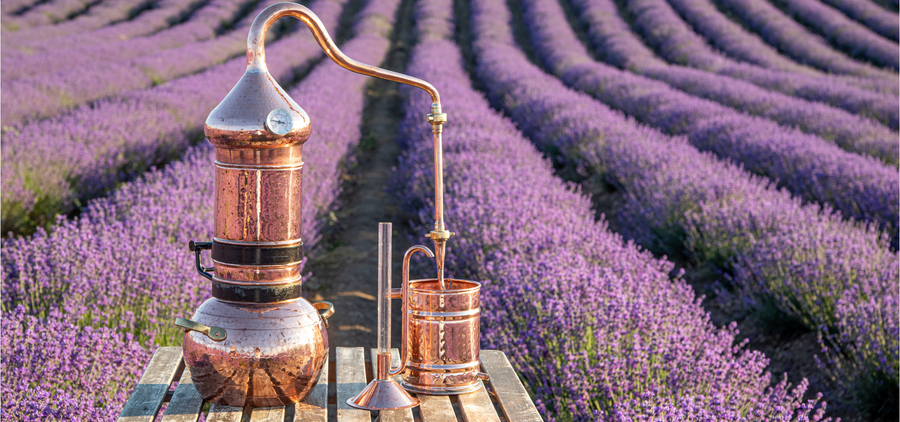
The traditional method is tincturing. The raw material is crushed and left to steep in high-proof alcohol for months, sometimes years. Tinctures of ambergris and musk were known to improve with age, softening and becoming more rounded the longer they sat. Some perfume houses kept ambergris tinctures aging in their cellars for decades, like vintage wine.
Some materials were also extracted with solvents, the same way flowers are, to make absolutes or resinoids. Civet absolute, castoreum absolute and hyraceum absolute were all produced this way. Others, like choya nakh, come from roasting and smoke. These are thick, concentrated materials, and a single drop goes a long way.
The Animal Materials
Musk
True musk comes from a gland, or pod, in the abdomen of the male musk deer, a small, shy, fanged deer of the mountains of Asia. Traditionally, the deer were killed to remove it. Dried, the pod contains grains that smell warm, powdery, sweet and slightly animalic, and the scent is extraordinarily long-lasting — musk can linger on fabric for years. Its main scent molecule is muscone. Some musk deer are now farmed in China, where the musk is scraped from live animals, but this is still controversial and far from cruelty-free.
Civet
Civet is a thick paste from the glands of the civet cat, a small mammal from Africa and Asia that isn't actually a cat at all. Raw, it smells strongly fecal. Diluted, it becomes warm, sweet and floral, and it was often used to deepen jasmine and rose. Most civet came from Ethiopia, where the animals were kept in small cages and the paste was scraped from their glands every few weeks. Not a happy story.
Castoreum
Castoreum comes from scent glands near the tail of the beaver. It smells leathery, smoky and slightly sweet, with a birch tar edge, and it was central to classic leather perfumes. It was usually a by-product of trapping beavers for fur.
Muskrat
Muskrat musk comes from the glands of the North American muskrat, also a by-product of the fur trade. It was used in the early 20th century as a cheaper alternative to deer musk, but it was never as fine or as widely used.
Ambergris
Ambergris forms in the gut of sperm whales, most likely as protection against the sharp beaks of the squid they eat. The whale expels it, and it can float at sea for years before washing up on a beach. Fresh ambergris smells harsh and fecal. Sun, salt water and time slowly turn it into something soft, sweet, salty and mineral, with a warm, almost tobacco-like glow. Its key compound is ambrein, which breaks down into the molecules responsible for its scent.
Finding a lump of ambergris on a beach is a little like winning the lottery. Every few years, a lucky dog walker somewhere in the world makes headlines for finding a piece worth a small fortune. (If you find a strange, waxy, grayish lump on the beach that smells of the sea and old tobacco, don't throw it away, please send it to us.)
Hyraceum
Hyraceum, sometimes called Africa stone, is the fossilized waste of the rock hyrax, a small mammal from southern Africa that looks a bit like a guinea pig but is, surprisingly, a distant relative of the elephant. Hyraxes use the same spots in the rocks for generations, and their waste builds up and hardens over hundreds or even thousands of years. It's collected from the rocks without disturbing the animals. Its scent is deep and complex — musky, leathery and fermented, with notes that recall civet, castoreum and tobacco.
Beeswax and Honey
Beeswax absolute is made by extracting beeswax with solvents. It smells warm and honeyed, with notes of hay, tobacco and pollen. Most honey notes in natural perfumery come from beeswax rather than from honey itself. Bees aren't killed to make it, though it isn't considered vegan.
Wool Absolute
Wool absolute is extracted from sheep's wool and its natural wax, lanolin. It smells warm, soft and animalic, a little like a woolen sweater after a walk in the rain or the warm flank of a sheep in the sun, and it adds a cozy, lived-in depth to a base. The sheep aren't harmed, but like beeswax, it isn't vegan.
Onycha
Onycha is the operculum — the small, hard "door" that closes the shell — of certain sea snails. It's one of the oldest animal materials in incense and appears in ancient incense recipes. When burned, it gives off a marine, leathery, animalic smoke. It's still used in some traditional Middle Eastern and Japanese incense. It's a by-product of snails caught for food, so it isn't cruelty-free.
Choya Nakh
Choya nakh is a traditional material from India, closely related to onycha. Nakh refers to the shell, and choya to the roasting process. Seashells are roasted until they smoke, and that smoke is captured, traditionally in sandalwood oil, in a method related to dry distillation. The result smells smoky, leathery and salty, with a burnt, marine and animalic edge, like a beach fire on wet stones. It's one of the few materials that can bring the sea and smoke into a perfume at the same time. Because it comes from shells, it isn't vegan.
Prohibition and Regulation
As concern for wildlife grew in the 20th century, animal materials came under increasing restriction. All musk deer species are now listed under CITES, the international agreement on trade in endangered species. Populations in some countries are listed in Appendix I, which bans international commercial trade, and the rest in Appendix II, where trade needs permits. Poaching for musk is still a serious threat to wild deer.
Ambergris sits in a legal gray area. Because it's naturally expelled, CITES treats it as a waste product rather than a whale product, and it's legal to collect and sell in the UK and the EU. In the United States, Australia and India, however, it's illegal to trade, as part of the wider protection of sperm whales.
Civet and castoreum aren't banned outright in most countries, but almost the entire perfume industry has stopped using them on ethical grounds. Several early synthetic musks have also since been banned or restricted over safety concerns. Read more about the rules in what is IFRA?
The Modern Approach: Synthetic Replacements
Chemists began recreating animal materials more than a century ago, and today synthetics make up almost all animalic notes in perfume. Read the full story in aroma molecules.
- Musk: The first synthetic musks were discovered by accident in 1888, when chemist Albert Baur was working on explosives and noticed his experiments smelled oddly wonderful. These nitro musks were followed by polycyclic musks like Galaxolide and Tonalide, and by macrocyclic musks like Exaltolide, Habanolide and synthetic muscone, which come closest to the real thing. Most "white musk" and clean-laundry scents are built on these molecules.
- Civet: Civetone, the main scent molecule of civet, can be made synthetically. Perfumers combine it with molecules like indole and skatole to rebuild civet's warmth and animal edge.
- Castoreum: Castoreum is recreated with specialty bases that combine leathery, smoky and sweet materials, often alongside birch tar and labdanum.
- Ambergris: Ambrox (also sold as Ambroxan) is one of the most important molecules in modern perfumery. It's made from sclareol, a compound from clary sage, and it gives the warm, mineral, radiant effect of ambergris. Related molecules like Cetalox and Ambrocenide work in a similar way.
- Honey and beeswax: Molecules like phenylacetic acid recreate the sweet, waxy, animalic side of honey without any bee products.
Natural Animalics Without Harming Animals
A few natural animal materials can still be used without killing or confining animals:
- Ambergris: found on beaches after the whale has expelled it naturally. It's cruelty-free but rare and very expensive.
- Hyraceum: collected from rocks without disturbing the hyraxes, and the closest natural alternative to civet and castoreum.
- Beeswax absolute: made without harming bees, though not vegan.
- Wool absolute: made from sheep's wool without harming the sheep, though not vegan.
Animalic Notes From Plants
Some plants have a surprisingly animal-like scent, and perfumers use them to add warmth and skin-like depth:
- Ambrette seed: from a type of hibiscus, with a soft, musky, slightly fruity scent. It contains its own natural musk molecule, ambrettolide.
- Angelica root: earthy and green, with a musky undertone.
- Labdanum: a resin from the rockrose shrub with a warm, leathery, ambery scent, often used to build ambergris-like accords. Fun fact: it was once harvested by combing it out of the beards of goats that had grazed among the shrubs.
- Costus root: strongly animalic, with a smell often compared to hair or unwashed skin. Its natural extracts are now prohibited by IFRA, so perfumers use synthetic reconstructions instead.
- Cumin: warm and sweaty, adding a skin-like edge in small amounts.
- Jasmine: naturally rich in indole, which gives it its heady, slightly animalic side. Read more in floral absolutes.
- Birch tar: smoky and leathery, often used where castoreum once was.
Animalic Materials in Dark Tales Perfumes
The natural animalic materials in our perfumes are hyraceum, beeswax absolute, wool absolute and choya nakh. Every perfume is clearly labeled vegan or non-vegan on its product page, so you always know what's inside.
Ondskan
Hyraceum, choya nakh and wool. Our darkest perfume uses all three, with gunpowder, cold stone, burned resins, leather and a blood accord. The animalics give it its unsettling, almost living depth.
Knight of Darkness
Wool on rain-soaked armor. Created with our partner Secret Perfume: wool in the base with oud, treemoss, vetiver, tobacco leaf, oakwood and a vegan ambergris note, for a knight riding beneath a smoky amber sky.
Memento Mori
Wool and moss in Mourning House. Wool sits in the heart with tree moss, oakwood and cedarwood, between spiced cherry and whiskey on top and agarwood, aged vanilla and amber below — like old coats in a house nobody has opened for a century.
Black Waters
Choya nakh from the sea. Roasted seashells and seaweed over sea salt, ozone, vetiver and ebony woods, for a stormy sunken kingdom.
The Witches
Roasted shells after the ritual. Choya nakh in the base, beneath black licorice, dark rose, incense and smoky woods.
Floating Candles
Beeswax candlelight. Beeswax absolute brings the honeyed warmth of real candles to incense, dark amber and aged vanilla.
Haunted Circus
Beeswax at the fairground. Beeswax adds a waxy, honeyed depth to caramel popcorn, rubber balloons and autumn leaves.
Ambergris, Recreated
Ambergris appears in several of our current perfumes as a vegan reconstruction, built to capture the soft, salty, mineral glow of the real thing — which is why these perfumes are labeled vegan.
- NSFRTÅ: ambergris in the base with incense, leather and vetiver, beneath dried blood and dark rose.
- Persika: ambergris warming sandalwood nut and benzoin beneath peach, apricot and osmanthus.
- Skandal Rōse: ambergris, sandalwood and treemoss beneath a layered rose.
- Knight of Darkness: ambergris alongside oud and wool. This one is labeled non-vegan because of its wool absolute.
Coming Soon: Real Ambergris
Our upcoming perfume, connected to our gothic novel The Cabinet of Lost Voices, will be our first to contain real ambergris, as a tincture. It will be clearly labeled non-vegan when it's released. Until then, every ambergris note in our collection is a reconstruction.
Frequently Asked Questions
Do perfumes still contain animal ingredients?
Rarely from harmed animals. Most animalic notes today are synthetic. A few naturals like ambergris, hyraceum, beeswax, wool absolute and choya nakh are still used.
Is musk from deer still used?
Almost never in mainstream perfumery. Musk deer are protected, and synthetic musks replaced natural musk long ago.
Is ambergris cruelty-free?
Yes, when it's collected from beaches after being naturally expelled. It's illegal to trade in some countries, including the US.
What is hyraceum?
The fossilized waste of the rock hyrax, collected from rocks without disturbing the animals. It smells musky, leathery and fermented.
Does Dark Tales use real ambergris?
Not in our current perfumes — their ambergris notes are vegan reconstructions. Our upcoming perfume connected to The Cabinet of Lost Voices will contain a real ambergris tincture.
Are Dark Tales perfumes tested on animals?
Absolutely not! No Dark Tales perfume is ever tested on animals. Each one is clearly labeled vegan or non-vegan, and some contain natural animal-derived materials such as beeswax, wool absolute, hyraceum or choya nakh.
Final Thoughts
Animal materials shaped the history of perfume, and the warmth they gave is still part of how many perfumes smell today. The difference is how that warmth is made. Synthetic molecules, plant materials and a few cruelty-free naturals like ambergris and hyraceum now do the work that once depended on animals. Perfume kept its soul — and gained a conscience.