Every culture has its witches. Some fly on broomsticks, some in mortars, some on the backs of goats or borrowed cows. (Swedish folklore is very specific about this.) Some live in gingerbread houses, some in huts on chicken legs, some in a cottage at the edge of the village where the path turns to mud and the neighbors stop talking when you walk past. They are healers and poisoners, wise women and warnings, and they all have one thing in common: they smell interesting.
Think about it. A witch's world is full of scent. Drying herbs hanging from the rafters. Smoke rising from the hearth. Roots and resins in clay jars. Candle wax. The damp forest outside the door. And something mysterious simmering in the pot, which you probably shouldn't ask about. No wonder witch perfumes are one of the most loved corners of dark perfumery.
Witches in Folklore
Baba Yaga
In Slavic folklore, Baba Yaga lives deep in the forest in a hut that stands on chicken legs and turns to face her visitors. Her fence is sometimes decorated with skulls, which is a strong design choice. She flies through the night in a mortar, steering with a pestle, and sweeps away her tracks with a broom. Sometimes she eats the people who find her. Sometimes she helps them, gives them a magical gift or sets them an impossible task. She is terrifying, wise and completely unpredictable — which, honestly, describes many good perfumes too.
The Witches of Blåkulla
In Sweden, where our studio is, old folklore says that witches flew to a mysterious place called Blåkulla, a hidden meadow or island where they met the devil and held a great feast. They were said to fly there around Easter, riding broomsticks, goats or even borrowed farm animals.
This belief had a dark side. In the late 17th century, Sweden saw a wave of witch trials, often based on stories about trips to Blåkulla, and many people lost their lives. It's a reminder that behind the romantic image of the witch, there's real history, and many real victims.
Today, the tradition survives in a much kinder form. On Easter, Swedish children dress up as little witches — "påskkärringar" — with headscarves, long skirts, freckles painted on their cheeks and sometimes a broom or a copper kettle. They go door to door handing out drawings and Easter cards in exchange for sweets. It's adorable. It's also slightly unsettling if you know the history, which is exactly the kind of contrast we love.
Walpurgis Night
On the last night of April, Sweden celebrates Valborg, or Walpurgis Night, with great bonfires, choirs singing to welcome spring and a lot of people standing around in cold weather pretending it's warmer than it is. In older times, the fires were believed to protect homes, animals and villages from witches and spirits, as the boundary between winter darkness and spring light grew thin. In Germany, the same night was linked to witches gathering on the Brocken mountain — a scene that later appeared in Goethe's Faust.
The Wise Woman
Not every witch was a villain. In many villages, the "witch" was simply the woman who knew herbs — the one you went to when you had a fever, a broken heart or a difficult birth. She knew which plants soothed and which ones harmed. Many of the scents we now call "witchy" are really the scents of traditional medicine and kitchen gardens.
The Herbs of Witchcraft
Here are some of the herbs and plants that appear again and again in witch lore, and that perfumers love:
- Wormwood: bitter, green and mysterious, the gatekeeper herb of folklore and the soul of absinthe. See the absinthe note.
- Mugwort: herbal and slightly bitter, traditionally linked with dreams and protection.
- Rosemary: fresh and protective, long used to cleanse and ward off evil.
- Clary sage: herbal, musky and dreamlike.
- Lavender: calming, clean and protective.
- Juniper: crisp and piney, burned in old protection rituals.
- Frankincense and myrrh: sacred smoke for blessing and banishing. See incense in perfumery.
- Licorice and anise: sweet, dark and a little sinister.
And no, we don't use the poisonous ones. Belladonna, henbane and mandrake stay safely in the storybooks, where they belong.
What Does a Witch Perfume Smell Like?
- Forest: pine, fir, moss and damp earth.
- Herbs: bitter, green, medicinal plants drying by the fire.
- Smoke: incense, campfire and burning herbs.
- Dark sweetness: berries, licorice, honey or something brewing in the cauldron.
- Earth and mushrooms: the forest floor where she gathers her ingredients.
- Mystery: something you can't quite name, and probably shouldn't try to.
Dark Tales Witch Perfumes
Yaga
Into Baba Yaga's forest. Her name is spoken in hushed tones in the village. Children are warned never to wander too far into the ancient oaks, where her hut sways on chicken legs in the moonlight, its windows flickering with an eerie light. Those who seek her out for knowledge or power are never seen again.
The perfume opens with black pepper and black currant, moves into juniper wood and Siberian pine, and rests on myrrh and benzoin. It's green, fruity and untamed — a fresh, zesty walk through a shadowed forest, toward a door you really shouldn't knock on. First released as Baba Yaga in 2020, it was reformulated in 2022 and renamed Yaga in 2025.
Witching Hour
The hour when magic wakes. Twilight falls, shadows come alive and cloaked figures weave spells beneath the moon. The air hums with secrets.
Cocoa, coffee bean and gentle smoke open into tonka bean, nagarmotha and fermented mate, settling on fir balsam, black spruce, oakmoss, cypress and powder. It's earthy, warm and velvety, with a dark chocolate note, hints of autumn leaves and, on some skin, a fleeting forest-mushroom phase. The witch, it seems, has been foraging. Its drydown is a rich, velvety wood with exceptional longevity.
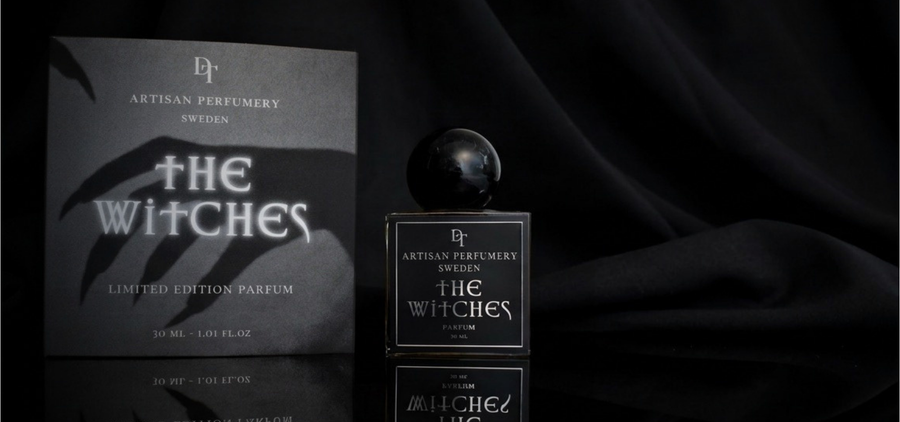
The Witches
Summoned, not born. They appear on frost-bound evenings when the dark feels deliberate and awake, moving without footsteps. Their presence sours the air with smoke and resin, a sweetness edged with decay. Those who meet their gaze return altered — or never speak again.
The perfume centers on black licorice, wrapped in black cherry, blackberry, red mandarin and clove, with dark rose, blue chamomile, fragonia, wild flowers and frangipani in the heart, and rosewood, silky woods, guaiacwood, incense and roasted seashells in the base. Sweet, smoky and slightly sinister, like the air after a forbidden ritual.
Blåkulla
The witches' flight across the northern sea. Not the Blåkulla of cute Easter cards, but the colder flight of old superstition: witches crossing the northern sky, leaving the bonfires behind, flying over black water toward the legendary island. Cold air, fragonia, airy florals and pale smoke drift into sea salt, soft woods, balsamic resin and clean conifers, settling on cade wood, amyris, dry amber woods, smoked leather, dark resin and soft musks.
Flying Salve
A witches' ointment for dreaming. From Alchemist's Dungeon, our ritual side project inspired by witchcraft and alchemy. In folklore, a flying salve was the legendary ointment witches used to "fly" — meaning trance, dreams and spirit journeys rather than actual levitation. Ours blends wormwood, rosemary, lavender and clary sage over frankincense, myrrh, black spruce, oakwood and dark vanilla, in jojoba oil and plant wax. It's 100% natural, vegan and alcohol-free. Broom not included.
Which Witch Are You?
- The forest hermit: Yaga
- The cozy cottage witch: Witching Hour
- The dangerous coven: The Witches
- The night flyer: Blåkulla
- The ritual practitioner: Flying Salve
Frequently Asked Questions
What does a witchy perfume smell like?
Usually a mix of herbs, forest notes, smoke, resins, earth and dark sweetness like berries or licorice.
What is Blåkulla?
In Swedish folklore, Blåkulla is the mythical place where witches were believed to fly to meet the devil, especially around Easter.
Is Yaga inspired by Baba Yaga?
Yes. It follows the witch of Slavic folklore into her forest.
Are these perfumes vegan?
Yaga, Witching Hour, Blåkulla and Flying Salve are vegan. The Witches contains choya nakh, so it isn't.
Final Thoughts
Witches have always lived at the edge of things: the edge of the village, the edge of the forest, the edge of what's allowed. A witch perfume lets you visit that edge for a while. Wear it on a full moon, on Walpurgis Night or on any ordinary Tuesday when you feel like brewing a little trouble.